
2026 Top Animatronic Dinosaurs Company for Global Buyers
A global buyer evaluating an Animatronic Dinosaurs Company needs more than a striking showroom video. The real test is how a dinosaur performs after installation: whether its jaw moves smoothly, its skin withstands repeated public handling, and its control system is practical for the venue’s staff. Small details matter. A loose cable near a display base or a confusing maintenance menu can turn an impressive attraction into a daily headache.
Walt Disney once said, “I would rather entertain and hope that people learned something than educate people and hope they were entertained.” That principle suits dinosaur attractions well. A convincing roar may draw visitors closer, but accurate movement, thoughtful storytelling, and clear safety instructions help make the experience worthwhile. Buyers should compare customization options, sample demonstrations, spare-parts support, and written warranty terms. Ask who handles installation and how routine servicing works. Get the details in writing.
This guide examines leading suppliers for 2026 through a buyer-focused lens. It considers product range, motion realism, materials, project support, and suitability for museums, parks, and exhibitions. No supplier is ideal for every project. A compact indoor model and a full-size outdoor figure face very different demands. Price alone will not tell the whole story, and online claims deserve careful checking. Even a polished proposal can leave unanswered questions. That is worth noticing.
What Animatronic Dinosaur Companies Offer Global Buyers
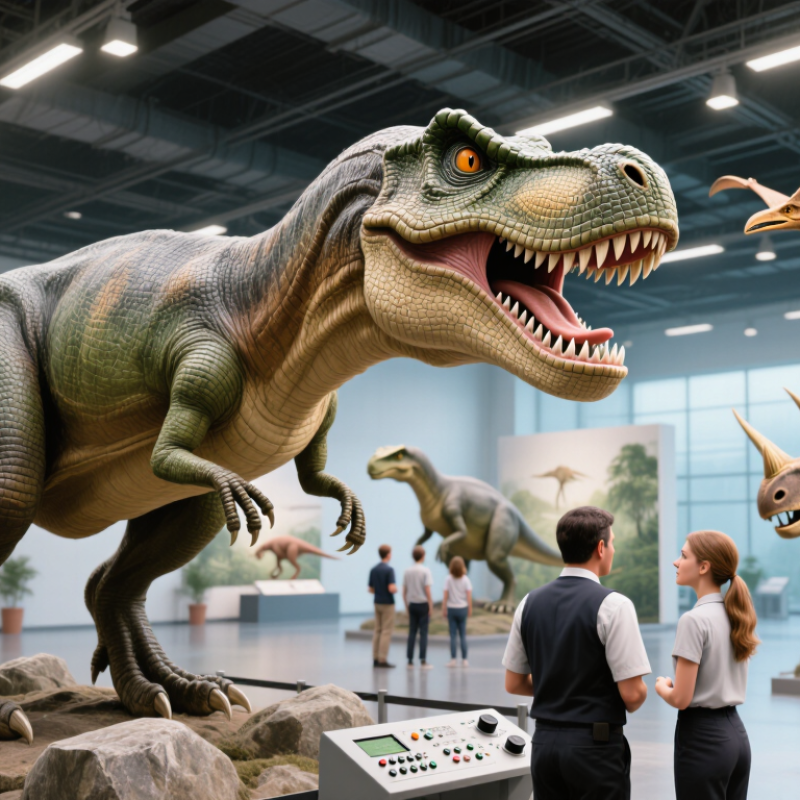
Animatronic dinosaur companies offer more than moving figures. Global buyers can often request custom species, body sizes, colors, skin textures, and movement patterns. A museum may need a slow, lifelike head turn, while a theme park may prefer a louder roar and broader motion. Ask for video of comparable models, not just polished concept images. Details matter.
Many suppliers also provide control systems, sound effects, installation guidance, and operating instructions. Some can help plan foundations, power access, and visitor viewing distances before production begins. For overseas projects, buyers should confirm packaging dimensions, shipping arrangements, spare-part availability, and who handles on-site setup. A crate can arrive safely yet still be difficult to move through a narrow service entrance.
Maintenance support is worth discussing early. Ask how technicians access motors, what routine checks are recommended, and whether replacement parts can be ordered later. Clear answers are useful. Vague promises are not. Specifications should list movement range, sound options, materials, power needs, and warranty terms in writing. A detailed proposal reduces surprises, though it cannot predict every site problem. Even experienced buyers may overlook humidity, dust, or uneven flooring. Planning for those ordinary conditions can make a display more dependable over time.
| Offer Area | What Buyers Can Typically Request | Useful Details to Confirm | Why It Matters for Global Projects |
|---|---|---|---|
| Animatronic dinosaur models | Product selections in different dinosaur species, poses, and display formats; custom designs may also be available. | Species, finished dimensions, pose, movement functions, materials, and whether the model is intended for indoor or outdoor use. | Size, access routes, installation space, and intended audience affect transport and site planning. |
| Movement and control systems | Movement options such as head, jaw, tail, body, or limb motion, with control methods selected for the project. | Included movements, operating sequence, control interface, power requirements, and any sensors or sound features. | Clear specifications help buyers plan power, supervision, operating procedures, and visitor interaction. |
| Design and customization | Options may include colors, surface textures, poses, themed finishes, and project-specific dimensions. | Approval drawings, reference images, revision process, final measurements, and what changes affect cost or lead time. | Written approvals reduce the risk of design differences between the agreed concept and delivered item. |
| Materials and environment | Construction materials and protective finishes selected according to the model design and planned display conditions. | Material specifications, weather exposure limits, care instructions, and any stated suitability for outdoor display. | Climate, sunlight, moisture, and visitor contact can affect maintenance needs and product life. |
| Testing and documentation | Pre-shipment checks and operating or maintenance documents may be included, depending on the purchase agreement. | Test videos or reports, electrical details, operating instructions, parts lists, and warranty terms. | Documentation supports installation, routine operation, and communication with local technicians. |
| Packing and international shipping | Export packing and freight coordination can be quoted for the destination and shipment configuration. | Packed dimensions and weight, shipping method, delivery terms, insurance, customs responsibilities, and unloading arrangements. | Freight, import duties, clearance, and final-site delivery may be handled by different parties. |
| Installation and commissioning | Guidance or on-site installation support may be offered as a separate service or project option. | Scope of work, site preparation, tools and lifting equipment, travel costs, local labor, and commissioning checks. | Confirming responsibilities in advance helps prevent delays when the equipment reaches the venue. |
| After-sales support and spare parts | Warranty support, troubleshooting guidance, and replacement parts may be available according to the sales agreement. | Warranty duration and exclusions, response channels, spare-parts availability, and who pays shipping or labor costs. | A clear support plan is especially useful when the buyer and supplier are in different countries or time zones. |
Offerings vary by supplier and project. Confirm all specifications, services, costs, and delivery terms in the written quotation and purchase agreement.
FAQS
Buyers may choose the species, size, colors, skin texture, movement, and sound. Share the display site and budget early. Small choices can affect cost and production time.
Ask for a video of the actual model moving through a full cycle. It should show startup, pauses, and shutdown. Concept images alone are not enough.
Check dimensions, materials, movement range, sound options, power needs, maintenance requirements, and warranty terms. Clear details help prevent surprises.
Ask about weather resistance, drainage, UV exposure, and inspection schedules. Dust and humidity matter too. I might still overlook a site condition.
Confirm crate dimensions, weight, shipping arrangements, unloading duties, and setup support. Measure narrow entrances before ordering. A safe delivery can still be hard to move indoors.
Watch the jaw, neck, and tail during a complete movement cycle. Look for smooth motion and listen for operating noise. Small jerks matter.
Ask how technicians reach the motors, which routine checks are needed, and how to order replacement parts. Get service terms in writing. Vague promises are not enough.
Compare the agreed specifications with a final inspection checklist. Leave time to review the finished model before approval. Rushed checks can miss small details.
Conclusion
This guide explains what an Animatronic Dinosaurs Company can offer global buyers, from lifelike dinosaur figures and interactive displays to installation guidance and after-sales support. It outlines how projects typically move from concept development and design through fabrication, mechanical and visual detailing, testing, and preparation for delivery. The goal is to help buyers understand the process and the options available before committing to a project.
The article also presents practical criteria for comparing suppliers in 2026, including product quality, customization capabilities, communication, project experience, service coverage, and shipping coordination. It reviews how a supplier may adapt sizes, movements, appearance, and control systems to suit different venues and audiences. For international projects, buyers can use these considerations to assess proposals, clarify responsibilities, and choose a partner whose capabilities and support align with their project requirements.
