
Outdoor dinosaur sculptures can turn a garden, park, or family attraction into a place visitors remember. But a dramatic silhouette is not enough. The best Durable Outdoor Dinosaur Sculptures must handle sun, rain, temperature changes, and frequent close-up viewing. Their materials, internal supports, surface coatings, and installation all affect how well they last.
Small details matter. Check whether the maker specifies outdoor-rated materials, such as reinforced fiberglass or properly treated metal, and asks about local climate conditions. Look closely at seams, claws, teeth, and painted scales, where water or wear may become visible first. A sturdy base and suitable anchoring are important, especially for large pieces exposed to wind. Installation guidance should be clear, and maintenance needs should be realistic rather than vague. Ask for product specifications, care instructions, and examples of completed outdoor projects before choosing.
There is no single best sculpture for every site. A shaded courtyard has different demands from an open coastal lawn, and a child-friendly display may need a different finish from a decorative centerpiece. Even a well-made figure can fade or need repairs over time. That is worth admitting. This guide compares practical options for 2026, focusing on durability, construction, appearance, and upkeep, so buyers can judge which dinosaur fits their space and expectations.
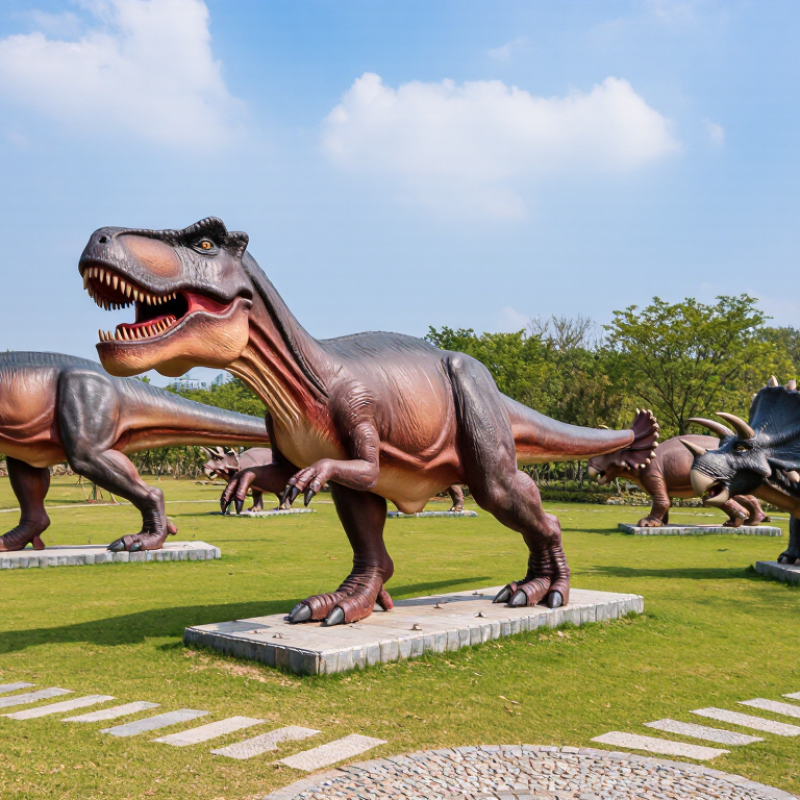
A durable outdoor dinosaur sculpture is built for repeated exposure, not just a convincing first impression. Its material should suit the local climate: reinforced fiberglass can be relatively light, while cast metal or stone-resin blends may offer greater weight. Ask how the surface handles ultraviolet light, rain, and temperature swings. A finish that resists fading helps, but it cannot prevent every scratch or chip. Small details matter. Check seams, claws, and thin tail sections for weak joins, since these areas can take more stress during handling and strong winds.
Installation is part of durability. A broad, stable base and suitable anchoring reduce the chance of tipping, especially on exposed lawns or patios. Look for drainage that prevents water from pooling inside hollow forms, where freezing conditions can worsen cracks. No material is truly maintenance-free, despite what product descriptions sometimes imply. A quick seasonal inspection can reveal loose fittings, peeling coating, or water entry before damage spreads. I would also consider repair access: a sculpture that can be patched or refinished may serve longer than one with a flawless but hard-to-repair surface. In practice, the best choice depends on the site, not size alone.
Sun, rain, and temperature swings test an outdoor dinosaur sculpture in different ways. Cast bronze handles weather well and develops a changing patina rather than peeling paint. That may suit a natural finish, but it is heavy and costly. Stainless steel can resist corrosion, though the alloy grade and weld quality matter. In coastal or frequently wet settings, ask for specifications rather than relying on the word “stainless.” The trade-off is real: polished metal may look less lifelike up close.
Fiberglass with a UV-resistant gelcoat offers detailed scales, claws, and facial features at a lower weight. It is easier to position, but sunlight can fade or chalk a weak coating. Look for repairable finishes and sealed joints. Ordinary resin is not automatically outdoor-safe. It can become brittle after repeated heating, cooling, and freezing.
Installation matters almost as much as material. Secure the sculpture against wind, keep its feet clear of standing water, and check that hollow sections can drain. Water trapped inside can expand during a freeze and split seams. No material is maintenance-free. A yearly inspection for cracks, loose anchors, rust spots, or peeling finish can catch small problems early. That routine is easy to overlook.
For a durable outdoor dinosaur sculpture in 2026, inspect the structure beneath the paint. A steel armature should have continuous welds, protected cut edges, and drainage that prevents water from pooling inside. Fiberglass shells need even thickness, sealed seams, and a UV-resistant finish; thin spots around claws and tails can crack first. I would not trust a glossy surface alone. NACE International’s 2016 IMPACT study estimated corrosion costs at US$2.5 trillion annually, about 3.4% of global GDP. That figure covers infrastructure, not sculptures. Still, it shows why hidden metal protection matters.
Ask how the sculpture was tested, not just how it was made. ASTM G154 exposes nonmetallic materials to accelerated ultraviolet light, while ASTM B117 evaluates corrosion resistance in salt fog. These tests help compare materials, but they cannot promise a precise number of outdoor service years. Site conditions matter: coastal salt, freeze-thaw cycles, intense sun, and poor drainage all accelerate wear. Solid anchoring and isolated dissimilar metals reduce avoidable stress. Small details count. A base that traps rain can undermine a strong frame, and a repairable finish may matter more than a perfect showroom shine. Request material specifications and inspection guidance before installation.
Choosing a durable outdoor dinosaur sculpture starts with the site, not the species. In home gardens, compact fiberglass or resin figures fit narrow paths and planted beds. They are easier to position, but thin shells may crack if struck or poorly anchored. Cast stone feels substantial and suits quiet garden corners, though it needs stable ground. A realistic finish can fade; appearance alone does not prove weather resistance.
Parks need sculptures that tolerate frequent public use and changing weather. Reinforced fiberglass can balance manageable weight with detailed shapes, while cast metal or stone offers a heavier presence. Large attractions often benefit from steel-supported structures and sealed, UV-resistant finishes. Check drainage, joints, and anchoring details before installation. Freeze-thaw cycles can expose weak seams, and even sturdy pieces need periodic inspection. No material is maintenance-free.
Tips: Match the sculpture’s scale to viewing distance. Ask how repairs are handled, and inspect finish samples outdoors. I would allow extra space around the base; crowded paths can make even a well-made piece feel misplaced.
Choosing an outdoor dinosaur sculpture starts with its site, not its color. Measure the display area and check sightlines, walking paths, and exposure to strong wind. A UV-resistant finish helps limit fading, while a stable internal frame supports larger figures. Fiberglass can offer detailed shapes without excessive weight; stone or concrete handles weather well but needs a solid base. No material is maintenance-free.
Check how the sculpture will be anchored before buying. A heavy body can still shift if its base is poorly secured. Ask about drainage, seams, and recommended installation, especially where winter freezing is common. Then inspect it every few months and after severe storms. Look for loose fasteners, hairline cracks, chipped coating, or water collecting near the feet. Clean with mild soap, water, and a soft brush; harsh solvents and forceful washing may damage the finish. Small repairs are easier early. A dull patch may seem harmless, but exposed reinforcement can corrode or weaken over time. Keep a simple note of repairs and inspection dates. It is easy to forget.
A practical maintenance schedule for helping outdoor sculptures withstand weather and stay in good condition.
Intervals are general planning suggestions, not guaranteed requirements. Check the sculpture maker’s care instructions, and inspect or clean more often in harsh weather, coastal air, heavy pollution, or high-traffic locations.
Inspect the frame, welds, seams, drainage, and anchoring. A glossy finish alone proves little.
Fiberglass or resin can suit narrow paths and planted beds. Cast stone feels substantial but needs stable ground. Small spaces matter.
Look for protected metal, sealed seams, UV-resistant finishes, and drainage that prevents water pooling. Freeze-thaw cycles can expose weak joints.
No. UV and salt-fog tests help compare materials, but cannot predict exact service years. Site conditions still matter.
Measure the display area and check sightlines, paths, and wind exposure. Match the sculpture’s scale to viewing distance.
Check it every few months and after severe storms. Look for loose fasteners, hairline cracks, chipped coating, or water near the feet.
Use mild soap, water, and a soft brush. Avoid harsh solvents and forceful washing. Gentle cleaning is enough.
Check the base, drainage, and anchoring. Crowded paths can feel awkward, and I might still underestimate how much space the base needs.
Durable Outdoor Dinosaur Sculptures in 2026 are defined by their ability to remain stable, attractive, and structurally sound through years of outdoor exposure. Choosing the right material is essential: weather-resistant options can better withstand strong sunlight, rain, moisture, and repeated temperature changes. Equally important is construction quality. A well-supported frame, secure joints, and carefully finished surfaces can help reduce wear, prevent damage, and extend a sculpture’s useful life.
The best choice also depends on where the sculpture will be displayed. A garden may call for a compact design that fits naturally into the landscape, while a park or attraction may benefit from larger, more robust pieces suited to frequent viewing. Before choosing, consider the display area, local weather, desired appearance, and available maintenance. Regular cleaning, timely checks for loose connections or surface wear, and appropriate protection during harsh conditions can help keep an outdoor dinosaur sculpture in good condition.
