
Choosing a dinosaur manufacturer is not just a matter of picking the most dramatic model. Global buyers need products that look convincing, work reliably, and arrive ready for installation. A moving dinosaur may impress visitors with a sharp roar and synchronized head motion. Yet loose wiring, rough paint, or an unstable base can quickly change that impression.
This guide introduces ten manufacturers for buyers comparing animatronic dinosaurs, static figures, and themed display pieces. It also explains what to examine before requesting a quotation. Ask about materials, motion systems, outdoor protection, customization, packaging, and after-sales support. Request recent project photos or videos, and confirm whether they show the actual product. A polished catalog is useful, but it cannot answer every practical question. Details matter.
High Quality Dinosaur Manufacture depends on more than sculpting skill. Consistent production, clear communication, and realistic delivery plans matter too. Buyers should compare specifications, warranty terms, and shipping arrangements rather than relying on a low headline price. Check how a supplier handles repairs and replacement parts. For large installations, confirm dimensions, power needs, and setup requirements before production begins. Even careful checks cannot remove every uncertainty; sometimes, a sample or reference call is worth the extra time. The manufacturers below offer different strengths and may suit different budgets, project scales, and visitor experiences. Use the list as a starting point, then verify each supplier against your own site and requirements.
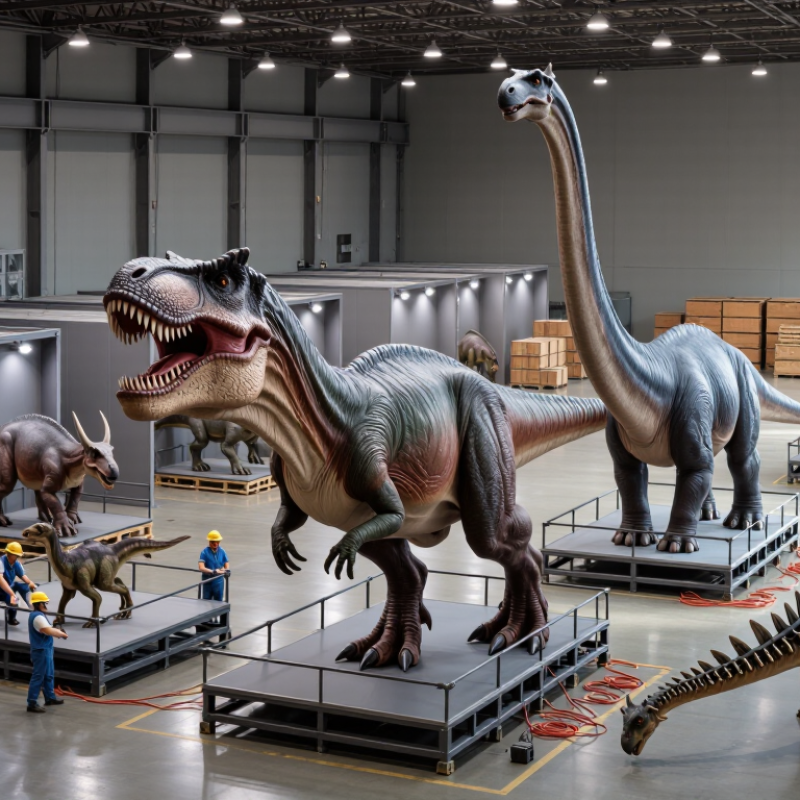
A capable animatronic dinosaur manufacturer connects sculpting decisions to the machine beneath the skin. Sculptors shape the skull, claws, and textured hide around planned joints, not just a static reference image. This prevents a moving jaw from colliding with the neck or stretching the surface unnaturally. Good prototypes matter. A full-size head mock-up can reveal awkward sightlines, stiff expressions, and maintenance access problems before fabrication begins. Some compromises remain: a realistic skin fold may restrict movement, while a wider joint may look less natural. Buyers should ask how the team tests these trade-offs.
Mechanics and controls determine whether movement feels convincing and remains repeatable. Ask for details on frame materials, actuator selection, cable protection, motion limits, and access to service parts. The International Federation of Robotics’ World Robotics 2024 report counted 4,281,585 industrial robots operating worldwide in 2023, a 10% annual increase. That is not a dinosaur-industry statistic, but it shows how established automation relies on measurable performance and dependable control systems. For a display, request a demonstration of the actual movement sequence, including startup, stopping, and recovery after a fault. Watch closely. A brief demo cannot prove long-term durability; cycle testing and written maintenance requirements provide stronger evidence.
Compare all ten manufacturers with one scorecard, not ten polished catalogues. Ask for the frame material, skin material, fastener type, and corrosion protection. A steel skeleton may suit a large outdoor figure, while fiberglass-reinforced plastic can form hard details. Flexible skins need clear cleaning and repair instructions. Request close-up photos of seams, joints, and access panels. Small details matter.
For motion, ask which parts move, how smoothly, and under what duty cycle. Request test videos and maintenance intervals, not only a movement demo. Where applicable, ask how the design addresses relevant ride-device safety standards, such as ASTM F2291. The TEA/AECOM 2023 Theme Index reported 244.6 million visits across the world’s top 25 theme parks, up 23.1% from 2022. That attendance makes dependable operation commercially relevant, though a park-wide figure cannot predict a dinosaur’s workload. Ask for the test conditions. A short video is not endurance evidence.
Compare quoted production time separately from packing, freight, and installation; require milestone dates and written delay terms. Warranty questions should cover labor, shipping, control systems, motors, and replacement-part availability. Ask how claims are documented and typical response times. A longer warranty sounds reassuring, but exclusions can make it less useful. Have each supplier state what is not covered, then compare like for like. One detail is easy to miss: confirm whether routine wear is excluded.
How to compare manufacturers across materials, motion, lead time, and warranty
How to use this chart: These suggested weights are an evaluation framework, not measured ratings of specific manufacturers. Apply the same criteria to each supplier and verify material specifications, motion-system details, written production schedules, and warranty terms before making a decision.
For buyers comparing dinosaur manufacturers, quality checks should begin with documented processes, not polished showroom displays. ISO 9001:2015 certification indicates that a factory operates a quality management system; it does not certify every dinosaur model or guarantee flawless performance. Ask how the supplier controls materials, assembly changes, and corrective actions. A useful answer includes inspection records, not just a certificate.
IEC 60529 IP ratings describe protection against dust and water under defined test conditions. Check the rating for the actual enclosure around motors, connectors, and control electronics. A weather-resistant outer skin does not prove that internal wiring is protected. Ask for test reports and clarify whether the rating applies to the complete unit or only selected components. Details matter.
Factory testing should match the dinosaur’s intended use. A practical inspection may run the figure through repeated head turns, jaw cycles, sound playback, and sensor responses. Watch for loose cables, uneven movement, or overheating after several minutes. Small faults show up. Request video of the specific unit, plus a signed checklist and clear acceptance criteria. One weakness in many inspections is relying on a brief demonstration; it can miss problems that appear after hours of operation. I would also ask how failed tests are recorded and retested, since a clean final report alone may hide useful history.
Outdoor dinosaur figures face dust, rain, washdown, vibration, and curious hands. IEC 60529 defines IP54 as dust-protected with protection against water splashes; IP65 is dust-tight and tested against water jets. That difference matters near muddy paths or ride queues. But IP65 is not a promise of survival under every pressure washer or prolonged immersion. Check seals, cable glands, service doors, and drainage together.
For ride-integrated installations, ASTM F2291 provides design practices for amusement rides and devices, including structural and mechanical considerations. It does not assign an IP rating or replace a project-specific safety review. Engineers should assess the figure’s mass, mounting points, moving-part clearances, and effects on the ride envelope. A loose tail panel can become a maintenance issue. Small details count.
Specify the exposure, not just the label. A supplier should document test conditions, materials, inspection intervals, and access to electrical components. In a coastal site, salt spray may challenge fasteners even when the enclosure passes an ingress test. I have seen specifications treat “outdoor rated” as a complete answer. It is not. Test records and a realistic maintenance plan make the rating useful.
| No. | Manufacturer Evaluation Dimension | Evidence to Request | Buyer Consideration |
|---|---|---|---|
| 1 | Outdoor enclosure protection | Current test reports identifying the tested enclosure, configuration, and applicable IP rating under IEC 60529. Confirm whether the rating applies to the complete assembly or only specific electrical enclosures. | IP54 indicates protection against limited dust ingress and water splashes; IP65 indicates a dust-tight enclosure and protection against water jets under the standard’s test conditions. Neither rating alone establishes suitability for every outdoor environment. |
| 2 | Weather-resistant construction | Material specifications, coating or finish details, corrosion-control measures, and maintenance instructions for the intended climate and installation location. | Rain, UV exposure, temperature changes, salt air, and standing water can affect different materials and components. Ask which conditions were assessed and what routine maintenance is required. |
| 3 | Ride-integrated design capability | Design documentation showing how the dinosaur figure, supports, moving parts, control system, and ride or attraction interface are coordinated. | For ride-integrated use, clarify design responsibilities and interfaces with the ride manufacturer, integrator, operator, and qualified engineering professionals before production. |
| 4 | ASTM F2291 coordination | A documented assessment explaining whether and how ASTM F2291 applies to the proposed amusement ride or device, including the responsible parties and supporting engineering records. | ASTM F2291 addresses the design of amusement rides and devices; it is not a general dinosaur-figure manufacturing standard or, by itself, proof of product certification. Applicability depends on the project and governing requirements. |
| 5 | Mechanical movement and guarding | Drawings or assessments covering moving mechanisms, pinch and crush points, access for maintenance, guarding, and applicable emergency-stop or isolation provisions. | Animatronic movement can introduce hazards. Review the complete installation and operating sequence rather than evaluating the figure independently of its surroundings and ride system. |
| 6 | Electrical and control documentation | Wiring diagrams, component lists, control descriptions, electrical protection details, and installation and service instructions for the supplied configuration. | Confirm that documentation matches the delivered equipment and that electrical design and installation are reviewed against the relevant local codes and project requirements. |
| 7 | Structural support and anchoring | Installation drawings, support and anchoring details, load assumptions, and project-specific engineering review where required. | Foundation and anchoring requirements depend on the site, installation arrangement, and applicable loads. Do not treat a standard display base as automatically suitable for a ride or public installation. |
| 8 | Factory quality and traceability | Quality-control procedures, inspection records, serial or component traceability, and a defined process for recording and resolving nonconformities. | Ask for evidence tied to the actual order and final configuration. A general company brochure does not establish that a particular unit was inspected or tested. |
| 9 | Testing and acceptance plan | A written plan identifying factory checks, functional testing, acceptance criteria, test records, and any site commissioning activities included in the scope. | Agree in advance on observable acceptance criteria for movement, sound, controls, and other supplied functions. Distinguish manufacturer testing from independent inspection or regulatory approval. |
| 10 | Installation, service, and spare parts | Installation and maintenance manuals, recommended inspection intervals, spare-parts availability, warranty terms, and procedures for technical support. | Outdoor and ride-integrated attractions require planned inspection and maintenance. Confirm service access, parts lead times, and the division of responsibilities after handover. |
Selection note: This table is a supplier-evaluation checklist, not a ranking or verification of ten named manufacturers. Confirm applicable standards, permits, testing, and engineering requirements with qualified professionals and the relevant authorities for the project location.
A reliable dinosaur manufacturer should fit the project, not just offer an impressive creature. Start with scale: confirm the model’s height, footprint, movement clearance, and shipping-crate dimensions against the site plan. Measure gates, loading areas, and indoor doorways. Small details matter. Ask for drawings before approving production, and check whether the base needs a level concrete pad or other support.
Climate changes material choices. Strong sun can fade finishes, while rain, humidity, and freezing temperatures may affect skins, joints, and electronics. Request written guidance for the installation location, including cleaning and seasonal storage needs. Compliance also deserves careful checking. Ask for component specifications, electrical documentation, and test records relevant to the destination and intended use; requirements can vary. I would not assume a supplier’s general certificate covers every configuration. Ask for proof.
After-sales support should be specific, not merely promised. Confirm warranty duration, response times, spare-part availability, and who handles installation or troubleshooting. Request clear photos or a video showing access to motors and wiring panels. A modest service plan can prevent a small fault from becoming a long shutdown. One question is easy to miss: who pays for replacement shipping? Get the answer in writing.
Ask for the frame, outer skin, fasteners, and corrosion protection. Steel may support a large outdoor figure, while reinforced plastic can shape hard details. Check seam photos.
Confirm which parts move, how smoothly they operate, and their duty cycle. Request maintenance intervals and videos showing repeated movement. One quick demo is not enough.
Ask about test conditions and how long the figure ran. A few head turns on video cannot prove reliable operation after hours. That distinction is easy to miss.
Separate production time from packing, freight, and installation. Request milestone dates and written terms for delays. A single delivery estimate can hide several waiting periods.
Ask about labor, shipping, motors, controls, and replacement parts. Get exclusions in writing, including routine wear. Longer coverage may sound better, but details matter.
It shows that a factory follows a documented quality system. It does not certify every figure or guarantee flawless performance. Ask for inspection records and corrective-action examples.
Request the rating and test report for the actual motor, connector, and control enclosures. An outdoor-ready skin does not prove internal wiring is protected. Small distinction.
Ask for repeated head turns, jaw cycles, sound playback, and sensor checks. Watch for loose cables, uneven motion, or heat after several minutes. Request a signed checklist, too. A clean final report may not show failed tests or retests.
Choosing a High Quality Dinosaur Manufacture partner requires looking beyond appearance. Buyers should assess the full process, from sculpting and durable materials to mechanical design, movement options, control systems, production timelines, and warranty coverage. Comparing manufacturers on these practical factors helps clarify which supplier can meet a project’s scale, operating conditions, and maintenance needs.
Quality checks should include documented production procedures, appropriate water- and dust-resistance ratings, and thorough factory testing. For outdoor displays or ride-integrated installations, confirm that the design suits the local climate and intended use, and review relevant engineering and safety considerations. Before placing an order, buyers should also verify customization capabilities, delivery arrangements, after-sales support, and access to replacement parts. A clear checklist makes it easier to select a dependable manufacturer and plan for long-term performance.
