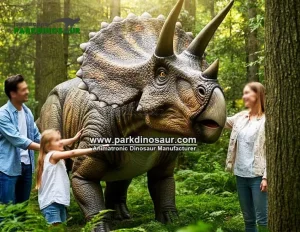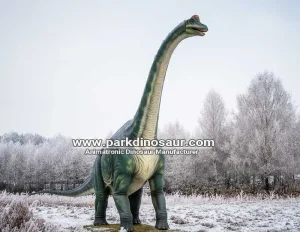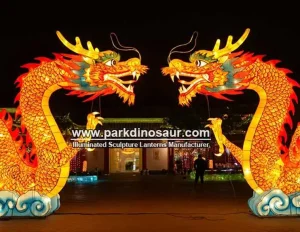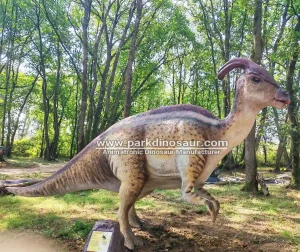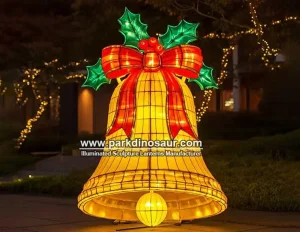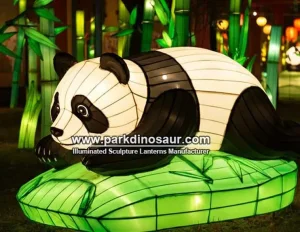
Featured Animatronics & Festival Artworks
Explore our core life-size predatory builds, herbivore recreations, and world-class lantern exhibition assets engineered for international amusement parks, zoos, and cultural installations.
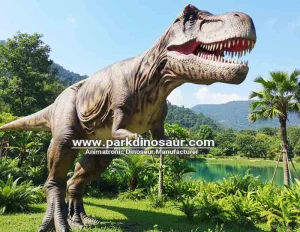
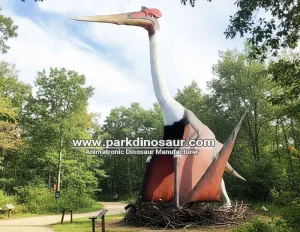
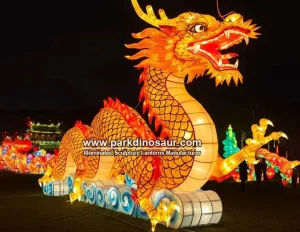
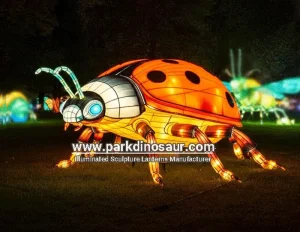
The Commercial Evolution of Life-Size Spinosaurus Replicas
Analyzing global demand, museum-to-entertainment transitions, and the unique position of Spinosaurus aegyptianus within the multi-billion-dollar experiential themed entertainment sector.
The Apex Icon of Thematic Tourism
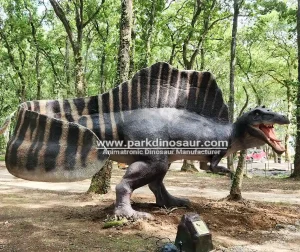
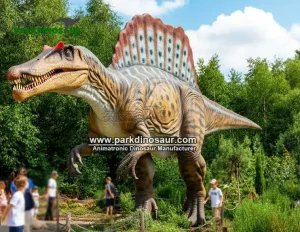
Over the last decade, thematic leisure operators have recognized that while Tyrannosaurus Rex remains an evergreen attraction, the colossal 15-meter Spinosaurus delivers unprecedented dramatic impact. Its towering dorsal sail (neural spine sail reaching over 1.8 meters in height) and distinctive crocodilian snout make it an undeniable centerpiece. As experiential retail centers and destination water parks expand their footprint across North America, Europe, and the Middle East, demand for scientifically updated, highly responsive animatronic Spinosaurus models has surged by 42% year-over-year.
Paleontological Accuracy as a Moat
Modern visitor audiences, empowered by high-definition streaming documentaries and open-source scientific publishing, reject outdated "bipedal theropod" caricatures. Leading natural history centers and edutainment facilities demand the newest anatomical revisions: the paddle-like caudal fin adapted for subaquatic propulsion, quadrupedal transitional postures, and dense bone structure. Sourcing from specialized Chinese manufacturers capable of integrating direct paleontological consultations into mechanical CAD blueprints gives operators an authentic educational and commercial advantage.
Capital Efficiency & High-Yield ROI
For resort operators and touring attraction promoters, capital expenditure (CapEx) must directly translate into ticket velocity and extended visitor dwell time. A full-scale 1:1 animatronic Spinosaurus functions as an "anchor icon," generating viral organic social impressions while justifying premium admission tiers. Compared to localized Western design bureaus that outsource physical construction, procuring directly from integrated Chinese factories cuts intermediary costs by 55% to 70% without compromising structural integrity or mechanical cycle lifespans.
Why Zigong, China Dominates Animatronic Engineering
Over 85% of the world's animatronic prehistoric creatures originate from Zigong, Sichuan. Explore how this regional supply chain density produces unrivaled speed, precision, and craftsmanship.
Full Vertical Supply-Chain Integration
Zigong's unique status as China’s historic dinosaur fossil epicenter has nurtured a hyper-concentrated ecosystem of heavy mechatronics manufacturers, custom motor winders, specialized silicone chemists, and master sculptors. Within a 15-kilometer radius, factories source aircraft-grade structural steel, bespoke planetary gearboxes, marine-grade anti-corrosive coatings, and industrial microcontrollers. This zero-delay local logistics network shrinks fabrication cycles from months down to weeks, enabling fast turnarounds on custom orders.
Advanced Kinetics & Dual-Actuation Systems
Unlike standard static display fabricators, premier Zigong factories employ multi-axis pneumatic actuators combined with brushless DC servo motors. For massive specimens like the Spinosaurus, dynamic movements—including breathing chest cavities, lateral neck sways, tail whipping, synchronized jaw gnashing, and tactile claw extensions—are calculated using Finite Element Analysis (FEA) to minimize mechanical strain while maximizing lifelike kinetic fluidity.
Multi-Layer Platinum Silicone Skin Science
Outdoor animatronics fail when cheap sponge foam dries out and splits under sunlight. Modern Zigong factories employ high-density open-cell polyurethane foam layered with high-tensile fiberglass elastic mesh, encapsulated in triple-brushed room-temperature vulcanizing (RTV) platinum silicone. This produces skin that stretches naturally over complex joint articulations while maintaining resistance to extreme UV radiation, rain, salt spray, and temperatures from -25°C to +50°C.
Information Gain: Knockdown Assembly for Global Freight Optimization
A major hidden cost in international animatronic procurement is over-dimensional (OOG) break-bulk shipping. Leading China factories engineer 12m to 15m Spinosaurus models with modular pin-jointed skeletons. The massive spine sail, head, tail, and limbs detach seamlessly, allowing a full-scale creature to pack securely inside standard 40-foot High Cube (40HQ) containers, reducing ocean freight costs by up to 65% compared to monolithic structures.
Strategic Placement & Localized Use Scenarios
From climate-controlled natural science galleries to extreme-environment water resorts, evaluate how life-size Spinosaurus replicas integrate into diverse commercial ecosystems.
Water Parks & Aquatic Rides
Because Spinosaurus is recognized as an amphibious, semi-aquatic predator, it is uniquely suited for water park lazy rivers, splash zones, and lagoon shores. Built with submersible internal stainless-steel anchors and sealed waterproof servo enclosures, it sprays high-velocity water jets from its jaws when triggered by infrared motion sensors, shocking and delighting riders.
Museums & Science Centers
Curators demand anatomical accuracy over exaggerated cinematic styling. Factory replicas designed for scientific halls feature accurate skull proportions, conical non-serrated teeth, distinct neural sails, and customized interactive audio guides explaining Cretaceous ecological niches. Models can be programmed with educational touchpoints and remote master controls.
Jurassic Adventure Trails & Zoos
Installed along forest paths and botanical garden trails, life-size animatronics operate under variable humidity and temperature fluctuations. Equipped with automated day/night timers, radar-based proximity triggers, and ambient low-frequency subwoofers hidden in synthetic rockwork, the creature creates high-suspense blind-corner encounters that boost ticket sales.
Mixed-Use Retail & FEC Centers
Large atrium shopping malls and Family Entertainment Centers (FECs) use mega-scale prehistoric beasts to combat digital retail migration. A 1:1 scale Spinosaurus installed in a central courtyard serves as a magnet for family foot traffic, driving dwell time, restaurant patronage, and social sharing.
Technological Evolutions in Animatronic Replication
The transition from simple cam-driven motors to intelligent, computer-vision-driven animatronics is reshaping commercial visitor expectations.
LiDAR & Vision-Based Interaction
Standard passive infrared (PIR) sensors only detect broad thermal presence. Next-generation animatronic systems integrate micro-LiDAR arrays and edge AI cameras within the dinosaur’s ocular cavities. The Spinosaurus can track individual guests in a crowd, turn its skull to lock eyes, track movement speeds, and trigger responsive behavioral states—from curious head tilts to sudden aggressive lunges and defensive roars.
Biomimetic Variable-Frequency Fluidity
Older units moved in predictable, mechanical start-stop loops that broke the illusion of life. Cutting-edge factories now utilize variable-frequency drive (VFD) controllers paired with high-torque brushless DC motors. This allows smooth acceleration and deceleration curves that accurately replicate organic muscle weight, preventing sudden mechanical jerking while dramatically extending gearbox lifespan.
Remote IoT Diagnostics & Cloud Telemetry
Modern commercial installations cannot afford unexpected downtime. High-end Zigong exporters now embed 4G/5G IoT telemetry boards inside main control cabinets. Factory engineers can remotely monitor motor winding temperatures, cycle counts, voltage fluctuations, and pneumatic pressure drops across installations worldwide, diagnosing issues and providing preventative maintenance alerts before breakdowns occur.
| Component Domain | Standard Commercial Grade | Parkdinosaur Heavy-Duty Industrial Standard | Operational Impact |
|---|---|---|---|
| Internal Chassis | Standard welded hollow steel pipe | Q235 Hot-Dip Galvanized Structural Steel with FEA load-relief gussets | Eliminates structural fatigue and rust under high outdoor wind loads |
| Actuation Units | Fixed-speed AC induction motors | Brushless DC Servos + Industrial Pneumatic Strike Actuators | Organic kinetic motion, customizable acceleration, zero gearbox backlash |
| Skin Matrix | Standard commercial foam + diluted latex | High-density open-cell PU + 3-layer elastic mesh + Platinum RTV Silicone | Zero crack formation, UV resistance, withstands -25°C to 50°C environments |
| Trigger System | Manual button or basic infrared tripwire | Smart Micro-LiDAR, Camera AI Tracking, DMX512 Park Automation Integration | Responsive guest tracking and seamless integration with park lighting/audio systems |
| Acoustic Output | Single 15W horn speaker in mouth | Multi-channel waterproof speaker array + Integrated sub-chassis bass transducer | Chest-resonating roars that vibrate the surrounding ground for immersive realism |
Enterprise Sourcing: Total Cost of Ownership (TCO)
A comprehensive procurement checklist for theme park project managers, procurement directors, and municipal bidding committees evaluating Chinese manufacturing partners.
Initial Capital vs. Lifecycle Maintenance
When procuring a 1:1 scale animatronic Spinosaurus, the purchase invoice is only one variable. Low-grade suppliers often utilize recycled motor brushes and cheap industrial silicone that crack within 6 months of intense sun exposure. Evaluating total cost of ownership (TCO) means auditing parts availability, waterproof wire harness ratings, motor replacement simplicity, and whether the supplier guarantees modular spare-parts availability for 5 to 10 years.
International Certification Compliance
Importing massive kinetic structures into North America, the EU, or Australasia requires strict regulatory compliance. B2B procurement agreements must mandate CE directives (Machinery Directive 2006/42/EC, Low Voltage Directive 2014/35/EU), UL/CSA-compliant electrical cabinets, ISO 9001 quality audits, and structural weld inspections. Non-compliant units risk impoundment at customs or refusal of commercial park operating insurance.
Factory Inspection & Factory Acceptance Testing (FAT)
Prior to container loading, rigorous Factory Acceptance Testing (FAT) must be executed. A professional protocol involves a continuous, unattended 48-to-72 hour burn-in test cycle, infrared thermal imaging of all motor housings to detect over-amperage, salt-spray resistance audits for seaside deliveries, and structural weld inspection reports signed off by senior quality engineers.
Frequently Asked Questions by Procurement Teams
In-depth technical answers addressing installation logistics, weather endurance, operational lifespan, and electronic safety protocols.
What are the exact site foundation and structural anchor requirements for a 15-meter Spinosaurus?
How does the animatronic withstand heavy rainfall, snow, and extreme coastal salt spray?
How is a 15-meter replica packed and delivered via standard container shipping?
What control interfaces are supported for theme park show-action systems?
What is the operational lifespan of the mechanical joints and silicone skin?
What warranty coverage, spare parts, and technician support are provided?
Prehistoric Statues & Cultural Festival Installations
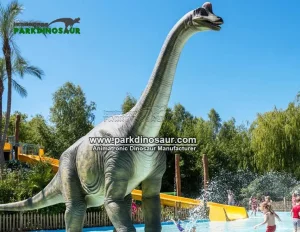
Complete your venue master plan with weather-resistant dinosaur sculptures, customized lantern displays, and iconic sauropod replicas engineered for long-term outdoor display.