
Engineered Attractions: Signature Luminous Lanterns & Kinetic Animatronics
Explore our high-durability, weather-certified installations deployed in leading tourist destinations, nocturnal festivals, and zoological parks worldwide.
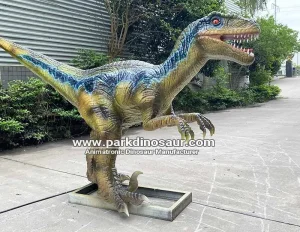
Life Size Realistic Velociraptor Animatronics
Request Technical Specs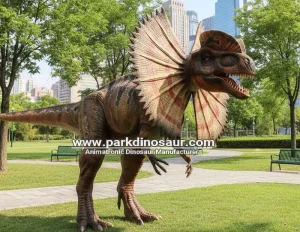
Jurassic Realistic Dilophosaurus Park Model
Request Technical Specs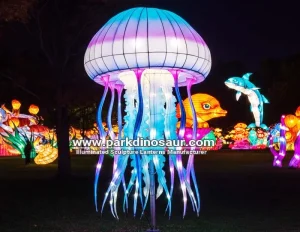
Giant Jellyfish Luminous Display Lantern
Request Technical Specs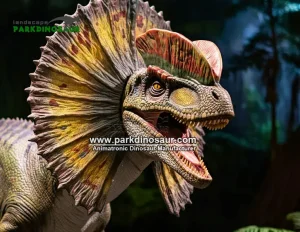
Jurassic Dinosaur Spitter Dilophosaurus
Request Technical Specs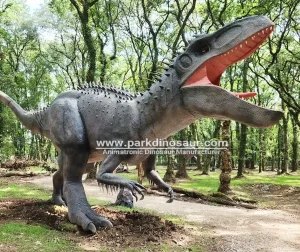
Custom Hybrid Dinosaur for Wildlife Parks
Request Technical Specs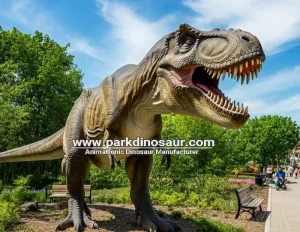
Life-Size Carnivorous T-Rex Dinosaur Statue
Request Technical Specs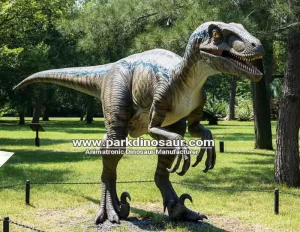
Weatherproof Industrial Animatronic Dinosaur
Request Technical Specs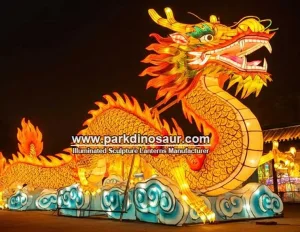
Large Imperial Dragon Chinese Festival Lantern
Request Technical SpecsEvolution of Luminous Display Lanterns: From Folk Craft to Smart Optoelectronics
The international entertainment, thematic placemaking, and commercial tourism industries have entered an era of experiential nighttime economies. Traditional static holiday light strings no longer meet visitor demands for sensory stimulation and interactive engagement. Over the past decade, Chinese luminous display lantern manufacturing—anchored primarily in Zigong, Sichuan—has undergone a structural transformation from seasonal handcrafting into an integrated multidisciplinary industry encompassing mechanical robotics, aerodynamic engineering, optoelectronic modulation, and smart IoT control systems.
Phase 1: Traditional Silk & Incandescent Lighting
Historically, festival lanterns relied on bamboo or low-gauge structural wire framing covered with dyed silk and illuminated by high-wattage incandescent bulbs. While visually vibrant, these setups suffered from substantial fire hazards, high electrical draws, fragile structural integrity in wind or rain, and short lifespans (typically under 30 operating days).
Phase 2: High-Density LED & Structural Steel
The integration of cold-light LED technology, high-tensile internal steel frameworks, and synthetic weather-treated fabrics marked the birth of commercial outdoor export lanterns. Lanterns could now endure 60 to 90 days of open-air winter exhibitions, reducing operating power requirements by up to 78% while enhancing chromatic stability and flame resistance (complying with NFPA 701 standards).
Phase 3: Cyber-Optoelectronic & Robotic Fusion
Modern China 4.0 installations unite custom DMX512 pixel-level lighting controllers, animatronic multi-axis skeletal actuators, radar sensor triggering, and waterproof micro-sound modules. Today’s luminous display lantern is no longer just an illuminated sculpture—it is an interactive, kinetic art piece engineered to survive extreme freeze-thaw cycles, monsoons, and high-traffic public exposure.
Global Enterprise Sourcing Architecture: Demands Across Municipal, Zoo & Theme Park Operators
International buyers of luminous display lanterns are predominantly commercial enterprise clients: municipal tourism development boards, zoological conservation parks, botanical gardens, commercial shopping lifestyle centers, and international theme park consortiums (such as European winter garden operators and North American holiday illuminations). Each sector evaluates procurement through strict criteria centered on ROI, visitor dwell time, safety compliance, and operational lifecycle cost.
| Buyer Category | Core Procurement Objectives | Critical Technical Parameters | Typical ROI & Revenue Channels |
|---|---|---|---|
| Botanical Gardens & Zoos | Off-season revenue generation during autumn/winter; family-friendly biological themes (insects, dinosaurs, ocean biomes); non-invasive installation on flora/fauna. | Low-noise mechatronics (<45dB), low-voltage DC24V ground lighting, non-toxic outdoor grade acrylic coatings, IP65 ingress protection. | Evening ticket premiums, seasonal night passes, exclusive F&B and merchandise retail sales; payback within 18–35 exhibition days. |
| Tier-1 Theme Parks & Resorts | High visitor retention beyond sunset; custom branded IP integration; crowd distribution control across secondary park pathways. | DMX512 real-time show sync, master control automation, structural wind rating up to Beaufort scale 10 (26 m/s), UL/CE listed cabling. | 35%–55% extension in visitor park dwell time; increased multi-day resort hotel occupancy and evening beverage spend. |
| Municipal Winter Festivals | Civic square revitalization; tourism attraction in sub-zero climates; civic landmark recognition and social media buzz. | Low-temperature anti-freezing silicone wiring (-40°C rated), heavy snow load engineering (up to 0.75 kN/m²), vandal-resistant perimeter bases. | Spillover economic growth for local hospitality, retail foot traffic, municipal sponsorship branding. |
| Shopping Lifestyle Centers | Drive physical retail footfall against e-commerce competition; create iconic photo opportunities and seasonal social sharing. | Compact modular installation footprints, rapid knockdown structure, indoor fire retardant certifications (B1 / NFPA 701). | Direct foot-traffic conversion spikes (+40% weekend visits), corporate event sponsorships, tenant turnover growth. |
China Factory 4.0: Supply Chain Agility, Efficiency, and the Zigong Industrial Cluster
Why do global project developers source their luminous displays and festival lanterns almost exclusively from Zigong, China? The answer lies in an integrated industrial ecosystem that cannot be duplicated elsewhere. Zigong combines two centuries of artisanal lantern craftsmanship with deep expertise in paleontology-grade animatronics and modern optoelectronic manufacturing.
Concentrated Upstream & Downstream Density
Within a 30-kilometer radius in Zigong, our facility accesses raw structural steel suppliers, specialized low-voltage waterproof LED manufacturers, synthetic flame-retardant fabric weavers, pneumatic/electric actuator engineers, and seasoned airbrush lacquer artisans. This industrial density eliminates weeks of logistics lead time, allowing us to build an entire 40-exhibit festival within 30 to 45 calendar days.
Engineering Precision & 6-Stage Quality Control
Unlike small trading intermediaries, our factory operates on an industrial stage-gate QC protocol:
Gate 1: Ultrasonic weld penetration inspection on load-bearing chassis.
Gate 2: 72-hour continuous burn-in electrical load test on LED matrices.
Gate 3: Mechatronic continuous movement cycle test under high loads.
Gate 4: Silicone skin tear and flexibility testing under temperature variations.
Gate 5: Full-immersion & high-pressure spray water-ingress checks.
Gate 6: Knockdown container pre-assembly simulation prior to ocean packing.
Containerized Modular Packaging & Fast Assembly
Shipping mammoth 12-meter Brachiosaurus animatronics or 30-meter Imperial Dragon lanterns overseas requires disciplined modular design. Our structural team utilizes parametric 3D CAD modeling to segment giant sculptures into components sized precisely for 40ft High Cube containers. All junction points utilize quick-connect waterproof bayonet wiring harnesses and high-strength bolt plates, enabling rapid on-site assembly without specialized welding crews.
Comparative Industry Benchmark: Luminous Lanterns vs. Conventional Displays
To understand why global experiential operators increasingly replace traditional Christmas lights or projection mapping with bespoke luminous display lanterns, consider the technological and capital comparisons:
| Evaluation Parameter | Custom Luminous Lantern Displays | Architectural Projection Mapping | Conventional Commercial Fairy Lights |
|---|---|---|---|
| Initial CapEx Investment | Moderate. Exceptional volumetric impact per dollar invested. | Very High. Expensive multi-laser projectors, servers, calibration. | Low to Moderate. High labor cost for manual tree/facade wrapping. |
| Daytime Visual Presence | High (Dual-Value). Sculptures act as vivid, colorful themed decor by day and illuminated spectacles by night. | Zero. Totally invisible and inactive during daylight hours. | Negative. Unsightly tangled wires and unlit bulbs exposed during daylight. |
| Environmental Adaptability | Engineered for wind (up to 100 km/h), rain, snow, and extreme ambient heat (-40°C to +50°C). | Delicate hardware; lenses require heated, climate-controlled environmental housings. | Moderate; vulnerable to wind damage, moisture leaks, and rodent wire chewing. |
| Storytelling & Thematic Depth | Unbounded. Any creature, myth, architectural fantasy, or biological life-size specimen can be sculpted. | High, but restricted strictly to the flat or contoured building surfaces available. | Extremely Low. Limited to simple geometric strings, curtain drops, or basic frames. |
| Operating Energy Consumption | Ultra-efficient low-voltage LED architecture (typ. 12W–45W per square meter of facade). | High continuous kilowatt power draws for industrial laser engines. | Variable, often inefficient with older incandescent or non-regulated strings. |
Localized Engineering: Navigating Harsh Global Operating Environments
A luminous display lantern designed for a Mediterranean summer festival will fail rapidly if installed in a Canadian sub-zero winter or an Arabian Gulf desert resort without climate-specific engineering. As a tier-1 Chinese manufacturer, we tailor structural and electrical parameters to four distinct global microclimates:
Sub-Zero Alpine & Nordic Zones
Key Risks: Heavy snow accumulation, ice build-up, fabric brittleness, silicone skin cracking.
Engineered Solutions: High-tensile steep shedding structural curves; cold-resistant siliconized wiring rated to -40°C; internal heating elements in mechanical junction boxes; reinforced truss structures designed for 0.85 kN/m² snow loads.
Arid Desert & High-UV Regions
Key Risks: Intense ultraviolet degradation, color fading, sand ingress, extreme day/night thermal cycling.
Engineered Solutions: UV50+ stabilized optical pigments; double-sealed IP66 motor enclosures; filtered sand-deflecting breathers on electrical control panels; heat dissipation chimneys for high-density LED arrays.
Humid Maritime & Coastal Parks
Key Risks: Salt-fog corrosion, electrolytic degradation of copper cabling, mold/fungus growth on fabrics.
Engineered Solutions: Hot-dip galvanized steel frames with epoxy anti-rust primer; marine-grade 316 stainless hardware; antimicrobial, hydrophobic fabric coatings; IP68 hermetically sealed lighting modules.
High-Traffic Urban Placemaking
Key Risks: Public contact, vandalism risks, trip hazards, stringent municipal electrical building codes.
Engineered Solutions: Concealed internal counterweight ballast frames (eliminating ground stakes); ground-fault circuit interrupter (GFCI) central distribution; safe DC24V touch voltage on visitor-accessible components.
Frequently Asked Questions by Global Engineering & Procurement Directors
Comprehensive engineering, regulatory, and logistics answers to facilitate fast-track approvals for international park operators, festival organizers, and commercial buyers.
What international electrical and fire safety standards do your luminous lanterns comply with?
How do you engineer structural stability and safety against severe winds?
Can animatronic movements and DMX lighting effects be fully synchronized?
What is the realistic operational lifespan of outdoor festival lanterns?
How does the shipping, customs clearance, and container packing process work?
What on-site installation support is available for international projects?
What spare parts and warranty terms are standard with factory orders?
Specialized Animatronic Specimens & Thematic Festival Lantern Collections
Explore additional life-size robotic figures, custom marine and botanical lantern installations, and interactive exhibits crafted to order in our Zigong production facility.
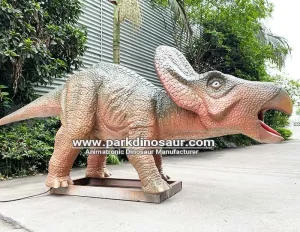
Robotic Baby Dinosaur Protoceratops Lifelike Model
Request Technical Specs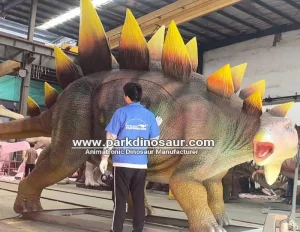
Giant Life Size Animatronic Stegosaurus
Request Technical Specs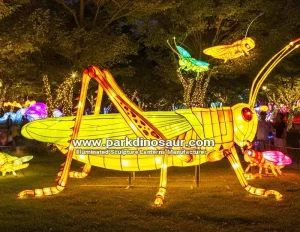
Chinese Lantern Lights - Insect Theme Lantern
Request Technical Specs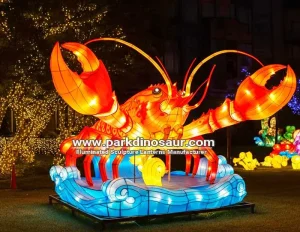
Custom Lobster Lantern Light Model for Events
Request Technical Specs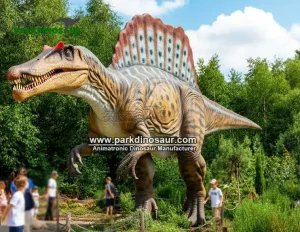
Life Size Spinosaurus Animatronic Model
Request Technical Specs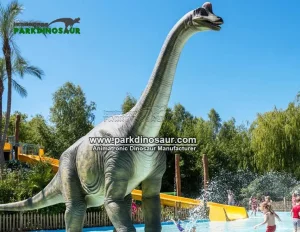
Realistic Long Neck Brachiosaurus for Water Parks
Request Technical Specs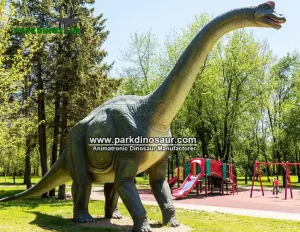
Large Landmark Brachiosaurus Dinosaur Statues
Request Technical Specs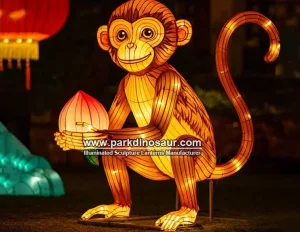
Chinese Zodiac Silk Monkey Lantern for Night Fairs
Request Technical SpecsProject Engineering Checklist: Information Needed to Issue a Formal Factory Quotation
To expedite your inquiry and receive a detailed parametric proposal—including CAD layout recommendations, power budget calculations, ocean freight estimates, and FOB/CIF pricing—please prepare the following project specifications:
1. Site Topography & Installation Area
Provide total available square meters, ground composition (paved asphalt, reinforced concrete, turf, natural earth, or water surface), and any site gradient or height clearance restrictions.
2. Power Distribution Architecture
Specify local utility supply voltage (110V 60Hz, 220V 50Hz, 240V 50Hz, 3-Phase 380V/480V) and available electrical substation transformer capacity across the planned festival zones.
3. Environmental & Climate Metrics
Indicate anticipated historical wind velocities, average rainfall, potential sub-zero temperatures, and snow load expectations during the exhibition operational window.
4. Thematic Brief & Visitor Pathways
Outline desired themes (Jurassic prehistoric trails, ocean glow worlds, mythological Chinese dragons, winter fairy lands) and estimated hourly peak foot traffic along visitor paths.
5. Target Timeline & Opening Date
Clarify desired soft opening dates. Production typically requires 30 to 45 days, followed by 20 to 35 days for ocean transit and customs clearance, plus 10 to 18 days for on-site commissioning.
6. Local Regulatory Requirements
Inform us of municipal permitting specifics, certified engineer stamp needs, flame-spread test protocols, or particular third-party safety inspection rules.