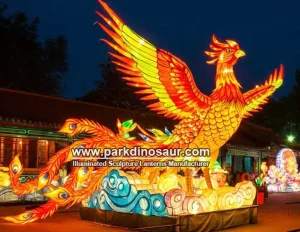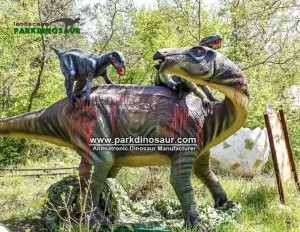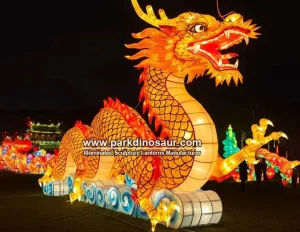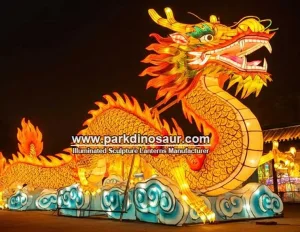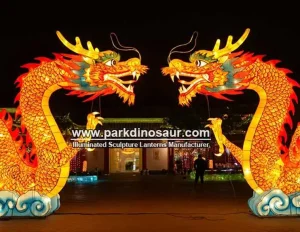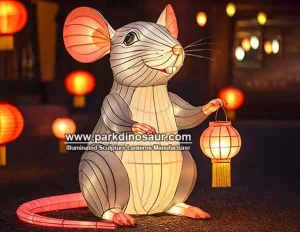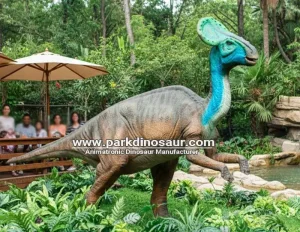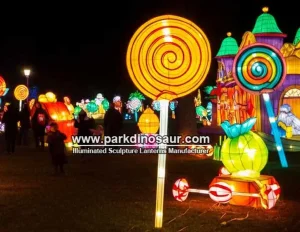
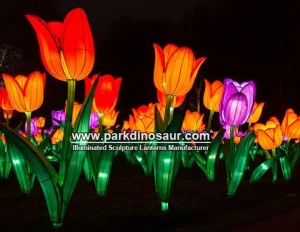
Featured Marine & Sculptural Exhibits
Precision Commercial Lantern Sculptures: Tier-1 Lineup
Engineered in Zigong’s specialized manufacturing corridor, combining structural load dynamics, flame-retardant composites, and programmable DMX512 optical systems.
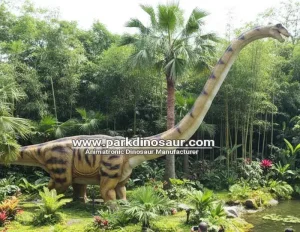
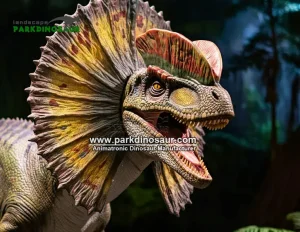
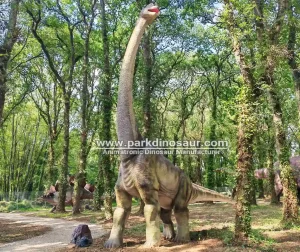
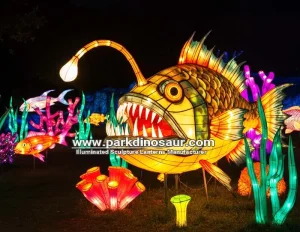
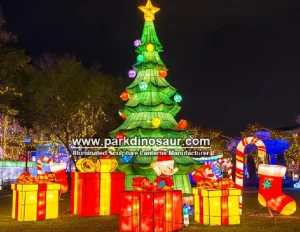

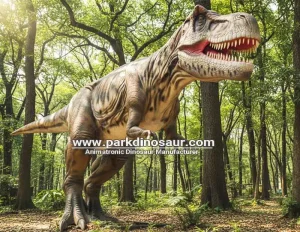
Industrial Landscape
Macro Dynamics of the Global Marine Illuminations Market
A technical assessment of maritime thematic engineering, night-tourism capital allocation, and China's dominance in biological lighting manufacturing.
84.6%
Global Commercial Lantern Supply Originating in Zigong, CN
IP68
Submersible & Coastal Marine Environmental Rating Achieved
50,000h
MTBF on Industrial Grade DMX512 Internal LED Systems
<30 Days
Standard Prototype-to-Deployment Fabrication Turnaround
The Thematic Night-Economy Pivot
Global municipalities and commercial destinations are executing aggressive shifts toward nocturnal activation. Destination real estate developers require high-impact, low-operating-cost installations. Sea animal lights represent an 18-month average ROI for municipal botanical parks, coastal piers, and tier-1 aquariums seeking to double dwell time and monetize evening visitation gate fees.
Biological & Morphological Realism
Traditional static festoon light ropes have been completely supplanted by anatomically articulated deep-sea creature sculptures. Utilizing digital 3D skeletal blueprints, our factory fabricates scale-accurate bioluminescent anglerfish, giant squid, and pelagic cetaceans that deliver pedagogical immersion alongside pure optical entertainment.
Integrated Kinetic Mechatronics
Modern procurement demands convergence between lighting and robotics. Our engineering integrates fluid pneumatic and brushless servo actuators inside the structural steel armature, synchronizing tail propulsion, mouth movements, and luminescent bioluminescent strobing to create living oceanic ecosystems after dark.
Technical Comparison Matrix
Engineering Standards: Industrial Grade vs. Commercial Off-the-Shelf
A rigorous audit of structural metallurgy, optical ingress protection, and thermal dissipative qualities required for outdoor hospitality infrastructure.
| Evaluation Parameter | Parkdinosaur Industrial Direct | Standard Trading Intermediary | Consumer Seasonal Tier |
|---|---|---|---|
| Internal Skeletal Metallurgy | Hot-dip galvanized Q235 steel, anti-shear welded | Cold-rolled mild steel, intermittent spot welds | Thin gauge wire / hollow aluminum tubing |
| Membrane Sheathing | Treated double-spun satin fabric (UV50+ / Fire Class B1) | Standard dyed nylon fabric (unrated UV) | Translucent plastic film / blow-molded PVC |
| Illumination Driver Architecture | Mean Well / Philips constant current, IP67 enclosure | Generic unbranded switching power supplies | Direct resistive load, non-waterproof adapter |
| Chroma Control Protocols | DMX512, Art-Net, or integrated sensor microcontrollers | Static preset chase or cyclic analog switches | Manual on/off toggle or infrared mini-remote |
| Wind & Climate Resilience | Engineered up to Beaufort Scale 10 (26 m/s wind load) | Up to Beaufort Scale 6 (12 m/s maximum) | Interior or fair-weather temporary use only |
Deployment Scenarios
Localized Application Scenarios & Sector Solutions
Configurable marine lighting topologies engineered specifically for challenging microclimates and heavy foot-traffic venues.
Coastal Waterfronts & Marine Piers
Waterfront zones subject installations to hyper-saline air, driving mist, and cyclic wind buffeting. We implement 3-coat marine epoxy coatings on internal armatures, airtight cable glands, and high-tensile anchor bases engineered to be ballasted directly onto boardwalk pylons or concrete piers.
Public Aquariums & Oceanariums
For indoor exhibit extensions and dark-zone educational corridors, these exhibits function as interactive wayfinding fixtures. Featuring silent DC brushless drivers, low-voltage 24V human-safe architectures, and non-glare internal diffusers designed not to distress live aquatic species in adjacent tanks.
Winter Light Trails & Holiday Resorts
In sub-zero alpine and northern European environments, our displays integrate self-regulating silicone heating elements to prevent ice bridging on delicate fins. Cold-resistant elastomers ensure outer membranes remain supple and resist cracking down to -30°C (-22°F).
Engineering Roadmap
R&D Trajectory: The Next Generation of Marine Light Art
How Parkdinosaur is bridging artisanal lantern craftsmanship with smart computing, responsive sensors, and circular-economy materials.
Spatial Computing & Visitor Interaction
Integrating LiDAR zone sensors and camera-based computer vision. When visitors approach a bioluminescent manta ray exhibit, the lighting pulse frequency matches movement velocity, transitioning from passive underwater ambient glows into high-frequency bioluminescent defense displays.
IoT Centralized Fleet Diagnostics
Incorporating wireless mesh networking (Zigbee / LoRaWAN) into every marine installation. Facility engineers can remotely monitor individual LED driver temperatures, line voltages, and actuator mechanical loads on a centralized web dashboard, heading off failures before operating hours begin.
Bio-Recycled & Low-Carbon Membranes
Pioneering the application of 100% rPET marine-recovered fabrics and non-toxic waterborne acrylic sealing coats. Our research aims to reduce production lifecycle carbon footprints by 38% while increasing tearing resistance across multi-month commercial seasonal festivals.
Quality Architecture
End-to-End Factory Value Chain Control
Eliminate broker markups and engineering miscommunication through our direct Sichuan manufacturing pipeline.
1. Direct CAD/CAM Prototyping
Every sea animal light concept undergoes structural stress verification and finite element analysis (FEA) to confirm wind load tolerance and center-of-gravity distribution before steel fabrication begins.
2. Master Artisan Silk Wrapping
Leveraging generations of Zigong intangible cultural heritage, our artisans meticulously apply hand-stretched treated silk membranes over intricate armatures, ensuring smooth transitions and crease-free biological silhouettes.
3. 72-Hour Continuous Burn-In
Prior to crating, all internal LED chains and mechatronic actuators undergo continuous 72-hour thermal stress testing. We verify zero lumen degradation, driver temperature limits, and seamless controller signal integrity.
Procurement Clarifications
Frequently Asked Technical & Logistics Questions
Clear, direct answers regarding marine lantern procurement, engineering specifications, customs handling, and overseas warranty execution.
What engineering distinctions separate sea animal lights from standard holiday lanterns?
Sea animal lights intended for commercial and coastal deployments require superior ingress protection, corrosion resistance, and optical diffusion. Standard holiday lanterns utilize non-galvanized framing and basic nylon sheathing. In contrast, our industrial sea animal installations utilize hot-dipped Q235 steel, marine-grade epoxy coatings, IP67/IP68 rated internal electrical assemblies, and specialized translucent satin fabrics that simulate organic biological skin and marine bioluminescence under complex DMX illumination programs.
How do large aquatic sculptures withstand extreme coastal wind and tropical rain?
Every piece is engineered with internal structural trusses and calculated ballast plates. For structures exceeding 5 meters (such as giant whales or long-necked plesiosaurs), we run structural wind-load simulations to verify resistance against gale-force gusts up to Beaufort Force 10. Fabrics receive hydrophobic, flame-retardant, and UV-stabilizing coatings to prevent color fading and tearing under intense sun or relentless seaside downpours.
Can animatronic movements and water spraying effects be integrated into marine displays?
Yes. As a leading manufacturer of both high-end festival lanterns and lifelike animatronics, Parkdinosaur routinely combines dynamic robotic motions—such as opening jaws, undulating fins, and swimming tail sweeps—with integrated misting nozzles or water jets. Actuators use industrial brushless motors or low-noise pneumatic pistons controlled via programmable PLCs and triggered by visitor microwave radar or PIR infrared sensors.
What is the standard production timeline and sea freight container optimization?
Production typically spans 20 to 35 business days depending on design complexity and volume (for example, our 10-unit custom build for MovieTowne in Trinidad was fabricated, QC-certified, and packed within 30 days). For international transit, large models are modularized into sectional flange assemblies designed to fit standard 40-foot High Cube (40HQ) containers without compromising skeletal rigidity upon on-site reassembly.
What on-site commissioning and overseas after-sales support do you provide?
Each shipment includes detailed 3D exploded assembly diagrams, labeled circuit schematics, and high-definition video walkthroughs. For major theme park installations, we dispatch certified field engineers to oversee ground bolting, ballast installation, electrical hookup, and control software tuning. Products come backed by comprehensive warranties up to 24 months, with expedited air shipping for all core electrical and mechanical spares.
Complete Festival & Attraction Portfolio
High-Impact Thematic Sculptures: Extended Series
Explore our complete commercial line spanning mythical lantern legends, prehistoric titans, and custom seasonal lighting installations.