
Industrial-Grade Animatronic Assets: High-Priority Procurement
Engineered for extreme continuous operation in tier-one amusement parks, public safari reserves, and immersive family entertainment complexes worldwide.
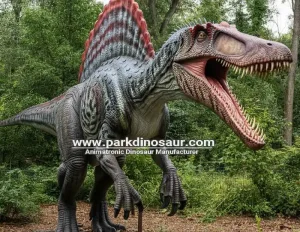
China Realistic Animatronic Spinosaurus Dinosaur Replica for Park Supplier, Factories
Technical Data & Quote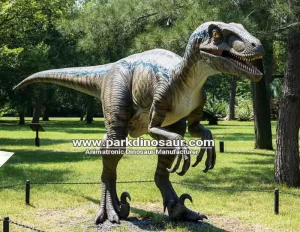
China Experienced Manufacturer Building Weatherproof Animatronic Dinosaurs For Theme Parks Manufacturer, Suppliers
Technical Data & Quote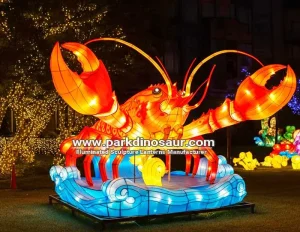
High-Quality Custom Lobster Lantern Light Model for Event-Festival Manufacturers, Factory
Technical Data & Quote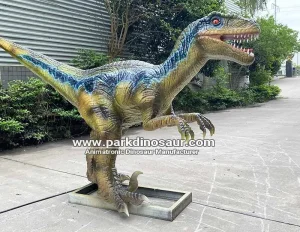
China Theme Park Decoration Life Size Realistic Velociraptor Animatronics Manufacturer, Suppliers
Technical Data & Quote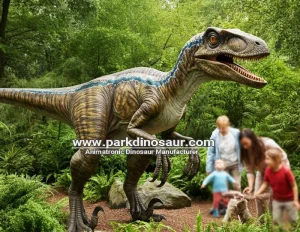
High-Quality Custom Life-size Blue Raptor Animatronic Velociraptor Manufacturers, Suppliers
Technical Data & Quote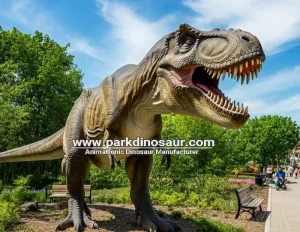
High-Quality Large Carnivorous Dinosaur Statue Life-Size T-Rex for Outdoor Attraction Manufacturer, Supplier
Technical Data & Quote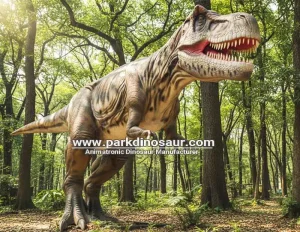
High-Quality Large Carnivorous Dinosaurs Jurassic Realistic T-Rex Model For Theme Park Manufacturer, Suppliers
Technical Data & Quote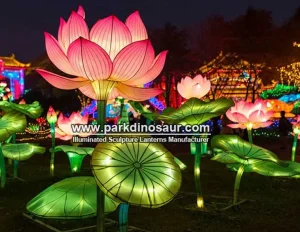
High-Quality Illuminated Lotus Lanterns for Chinese Lantern Festival Night Decor| China Manufacturer Parkdinosaur Supplier, Suppliers
Technical Data & QuoteMacro-Industrial Overview: The Global Animatronics Market
Strategic analysis of capital expenditure (CAPEX), total cost of ownership (TCO), and the industrial clustering powering modern immersive entertainment.
The contemporary theme park sector has undergone a profound transformation over the past decade. The demand for hyper-realistic, dynamic, and scientifically informed robotic animatronics has surged beyond traditional theme parks into zoological gardens, public edutainment facilities, forest adventure parks, and immersive experiential exhibitions. Sourcing managers and attraction procurement directors face complex engineering hurdles: balancing aesthetic fidelity against structural endurance, operational safety, energy consumption, and resistance to environmental stress.
1. The Industrial Epicenter: Zigong’s Manufacturing Synergies
The global production of animatronic dinosaurs and illuminated sculptural artware is anchored in Zigong, Sichuan Province, China. This historical geographical cluster accounts for more than 85% of worldwide supply. The convergence of the Dashanpu Jurassic fossil formation, the internationally renowned Zigong Dinosaur Museum, and a multi-century tradition of steel-framed lantern craftsmanship has created an irreplaceable industrial cluster. Here, structural welding specialists, biomechatronic technicians, kinetic sculpting artists, and control engineers collaborate within a tight supply-chain radius, drastically compressing engineering lead times while maintaining cost efficiencies unattainable in Western fabrication facilities.
As amusement park operators scale up their experiential offerings to compete with digital media, static fiberglass models are increasingly rendered obsolete. Park visitors expect fluid multi-axis locomotion, anatomically synchronised chest breathing, vocalised roaring coordinated with robotic jaw movement, and adaptive sensor activation that acknowledges their presence. Delivering these experiential features on a reliable, industrial-grade operational schedule requires a deep integration of industrial robotics, composite materials chemistry, and mechanical engineering.
Optimised B2B CAPEX vs. ROI
Direct sourcing eliminates multi-tiered agency markups, permitting up to a 40% reduction in capital expenditure per linear metre of animatronic installation without compromising structural or electronic integrity.
Duty-Cycle Engineering
Continuous operational endurance rated for 12–16 continuous operational hours daily. Mechatronic drive trains utilise brushless industrial servo motors and heat-dissipating gear reducers built for high-throughput visitor flows.
Global Safety Directives
Manufactured strictly within the frameworks of ASTM F2291 (Standard Practice for Design of Amusement Rides and Devices) and EN 13814, incorporating fail-safe electrical breakers and seismic base anchoring.
Engineering Specifications & Procurement Criteria
Comprehensive baseline parameters for theme park architects, mechanical engineers, and institutional buyers.
When engineering animatronic assets destined for public interaction, commercial procurement teams cannot afford premature material fatigue, motor burn-out, or silicone degradation under intense ultraviolet exposure. Every production iteration must align with standardised mechatronic tolerances and material safety data sheets (MSDS).
| Subsystem | Material / Component Specification | Engineering Standard | Operational Metric |
|---|---|---|---|
| Internal Chassis | Q235B Structural Carbon Steel / Galvanized Profiles | GB/T 700-2006, ASTM A36 | Resists wind shear up to Beaufort Scale 10 (102 km/h) |
| Kinematic Actuation | Brushless DC Motors / Digital Servo Actuators / Pneumatics | CE, UL 1004, ISO 9001 | Continuous MTBF > 100,000 duty cycles without backlash |
| Subdermal Matrix | High-Density Polyurethane Memory Foam (35–45 kg/m³) | ISO 845, Flammability Class B1 | Maintains elastic memory across -20°C to +50°C environments |
| Epidermal Membrane | Multi-Layer Platinum-Cured Silicone with Ripstop Fiber Mesh | ASTM D412, FDA Grade Non-Toxic | Elongation at break > 450%; anti-tearing reinforcement |
| Electronic Enclosure | Integrated PLC Microcontroller with Optocoupler Isolation | IP65 Outdoor Enclosure, CE Marked | Supports Infrared, Microwave Doppler, DMX512, and PLC control |
| Acoustic Subsystem | Dual-Horn High-Fidelity Waterproof Speaker Enclosures (50W–150W) | IP66 Waterproof Class | Dynamic acoustic range 40Hz–18kHz, synchronised to jaw kinematics |
Material Science: Multi-Layer Platinum Silicone Formulations
A primary failure mode in budget animatronic dinosaurs is premature epidermal tearing at high-stress articulating joints, such as the craniocervical junction, gular throat folds, and femoral pivots. Standard atmospheric grade room-temperature-vulcanizing (RTV) silicones degrade rapidly when exposed to atmospheric ozone, extreme UV radiation, and acid precipitation, leading to micro-cracking and eventual delamination within 6 to 12 months.
To eliminate this vulnerability, advanced manufacturing deploys platinum-cured silicone polymers integrated with multi-directional elastic fiber matrices. High-stress articulating zones receive an engineered internal composite skeleton of high-tensile fiberglass or nylon mesh embedded between consecutive silicone coatings. This process yields an epidermal layer capable of enduring millions of flexion cycles without surface fatigue, maintaining museum-grade aesthetic surface detail under severe outdoor climatic conditions.
Biomechatronic Architecture & Technological Roadmap
Transitioning from deterministic cyclic robotics to AI-driven interactive behavior, edge-computing diagnostics, and digital twin monitoring.
Multi-Axis Servo Kinematics
Replacing traditional asynchronous AC gear motors with closed-loop CAN bus brushless servo motors, allowing dynamic acceleration/deceleration profiling, realistic muscle tremors, and smooth organic motion transitions.
AI Edge Computer Vision
On-board optical neural processing units (NPUs) that detect human visitor demographics, gaze direction, and group density, triggering non-linear interactive behavioural sequences and directional eye-tracking in real time.
IoT Remote Diagnostics & Twin
Integrated temperature, current draw, and vibration sensors transmitting telemetry over MQTT/4G. Theme park maintenance supervisors can predict bearing wear and gear backlash before mechanical failure occurs.
Future Roadmap: Pneumatic, Hydraulic, or Electric Servo?
Amusement park engineering teams frequently evaluate drive actuation options based on specific environmental and operational requirements:
- Electric Digital Servo Actuation (Preferred for 90% of Standard Park Deployments): Provides high energy efficiency, zero risk of fluid leakage, whisper-quiet operation, and precise positional accuracy. Digital servo systems eliminate external compressor rooms, reducing overall installation infrastructure costs.
- Pneumatic Kinematics (Ideal for Rapid Attack Behaviors): Perfect for high-velocity jump-scares or rapid carnivore strikes in dark rides. Pneumatic cylinders deliver maximum explosive acceleration but require dedicated, clean, dry compressed air networks and sound dampening.
- Heavy-Duty Proportional Hydraulics (Required for Giant Mega-Fauna): Recommended for colossal specimens exceeding 18 to 30 metres (such as life-size adult Sauropods). Hydraulic proportional valves safely manage massive inertial moments and ton-scale head-and-neck assemblies without mechanical gear shear.
Six-Gate Quality Assurance: Engineering Integrity
Every robotic dinosaur undergoes a standardized six-stage inspection protocol before crate packaging and overseas container loading.
Gate 01: Steel Skeleton & Weld Metallurgy
Full ultrasonic and visual inspection of high-stress weld seams, structural joint deflection checks, center-of-gravity load balancing, and anti-corrosion zinc phosphate primer coating.
Gate 02: Continuous Mechatronic Aging Test
Uninterrupted 48-to-72 hour dynamic burn-in cycle. Continuous monitoring of motor thermals, current draw stability, gear wear, backlash, linkage alignment, and sensor trip latency.
Gate 03: Paleontological Sculpt & Anatomy
Foam carving verified by technical paleontological references. Comprehensive review of cranial dimensions, orbit placement, muscle striation, jaw proportions, and claw/teeth geometry.
Gate 04: Micro-Dermal Texture Carving
High-resolution detailing of epidermal scale patterning, osteoderm armor placement, skin folding, and throat sac pleats to guarantee realism under up-close visitor observation.
Gate 05: Platinum Silicone Skin Matrix
Application of multi-layer platinum silicone with internal structural mesh reinforcement. Complete verification of tensile elasticity, joint crease resistance, and weather seal integrity.
Gate 06: Multi-Spectral UV Painting & Pack
Polyurethane acrylic pigmentation resistant to UV fading. Detailed hand-painted eye glossing, final functional testing, waterproof connection sealing, and steel-frame ocean packaging.
Real-World Execution: MovieTowne Dinosaur World
How a major commercial entertainment developer verified reliability and rolled out an international dinosaur attraction.
Trinidad & Tobago Major Installation Profile
Client Organization: MovieTowne International Entertainment Complex (Port of Spain, Trinidad and Tobago)
Procurement Strategy & Risk Mitigation: Sourcing industrial animatronics across international borders requires stringent risk mitigation. To validate component quality, MovieTowne engineering personnel initially ordered a single standalone smart electronic control module. After running uninterrupted operational tests for heat tolerance, voltage drop, and logic stability, the client confirmed the complete master contract for 10 custom large-scale animatronic dinosaurs, including giant sauropods, carnivores, and dynamic interaction zones.
Factory Execution Window: Entire production cycle, mechanical framing, sculpting, multi-layer silicone skin application, 72-hour continuous testing, and ocean freight preparation completed within an accelerated 30-day turnaround.
Operational Outcome: The installation opened to high public acclaim, achieving rapid footfall return on investment, zero mechatronic failure during inaugural seasons, and leading to subsequent expansion contracts for additional animatronic exhibits.
Project Highlights
- 10 Custom Units: High-traffic, sensor-triggered dinosaurs up to 12 meters in scale.
- 30-Day Turnaround: From CAD drawing sign-off to full factory export inspection.
- Tropical Climate Specs: High-humidity silicone coatings and IP65 motor enclosures.
- Continuous Run Time: 12 hours/day without joint overheating.
Containerized Sectional Assembly & Field Support
Engineered modular construction simplifies ocean freight and rapid on-site assembly, supported by global technicians.
Modular Sectional Splitting
Massive specimens exceeding standard 40-foot High Cube (HQ) shipping container envelopes are designed with flanged, heavy-duty bolted steel coupling systems. Heads, tails, and limbs disassemble easily and connect flush on site with seamless silicone blending patches.
Complete Engineering Schematics
Every shipment includes high-precision foundation loading blueprints, anchor bolt layout dimensions, electrical single-line diagrams (SLDs), step-by-step video installation walk-throughs, and colour-coded wiring harnesses for straightforward local installation.
On-Site Engineering Deployment
For large-scale master-planned parks, seasoned mechanical technicians and artistic detailers can be deployed directly to your project location to oversee crane rigging, electrical integration, scenic camouflage, and local staff training.
Specialty Dinosaurs, Marine Lights & Festival Installations
Expand your attraction's operational envelope into evening revenue streams with custom illuminated lantern sculptures and hyper-detailed paleontological exhibits.
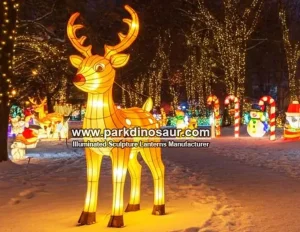
Buy Christmas Themed Illuminated Lanterns Deer Light Up the Night | Trusted Chinese Lantern Festival Manufacturer Manufacturer, Manufacturers
Technical Data & Quote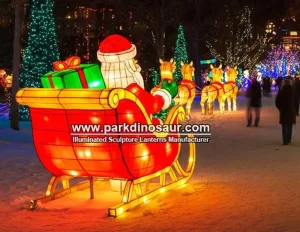
High-Quality Buy Christmas Lantern Decoration Night Santa Lights | China Lantern Festival Manufacturer Manufacturer, Suppliers
Technical Data & Quote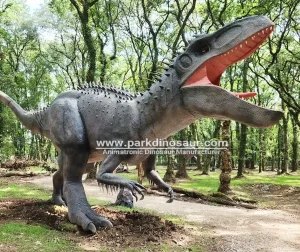
China Custom Animatronic Hybrid Dinosaur for Wildlife Parks and Outdoor Attractions Suppliers, Factory
Technical Data & Quote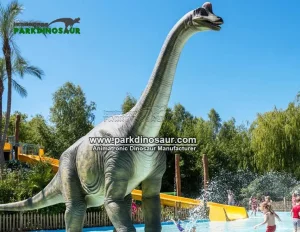
High-Quality Realistic Long Neck Animatronic Brachiosaurus for Water Park Decoration Supplier, Factories
Technical Data & Quote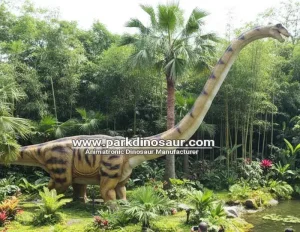
High-Quality Giant AnimatronicRealistic Dinosaur With Long Neck For Forest Decoration Factory, Factories
Technical Data & Quote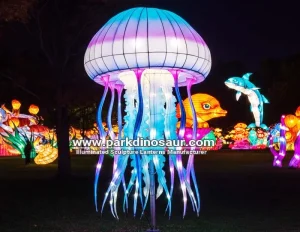
Buy Giant Jellyfish luminous display Lantern for Festival Suppliers, Factories
Technical Data & Quote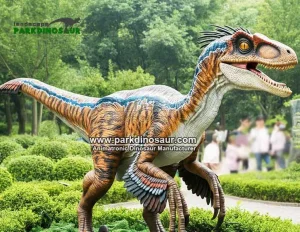
Buy Realistic Feathered Velociraptor Life Size Dinosaur Model| China Manufacturer Parkdinosaur Manufacturer, Supplier
Technical Data & Quote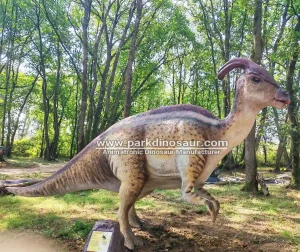
Buy 7m Custom Realistic Animatronic Parasaurolophus Dinosaur for Sale Manufacturer, Factories
Technical Data & QuoteFrequently Asked Engineering Questions
Precise architectural and contractual clarifications for attraction procurement officers, technical directors, and project engineers.