Festive Glow Corridor
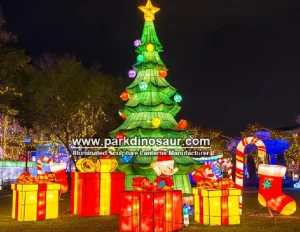
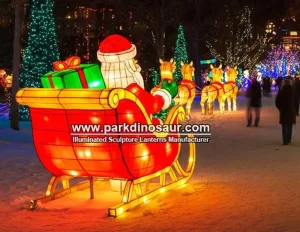
Pre-engineered holiday illuminations optimized for high-traffic summer festive seasons across Johannesburg, Cape Town, and Durban with tropical UV resistance and quick-deploy modular armatures.
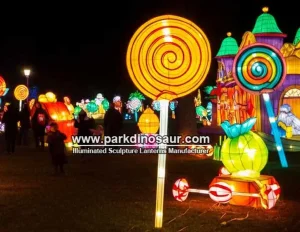
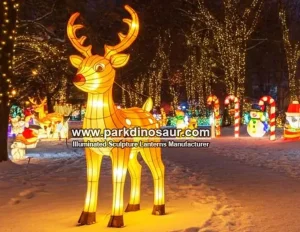
Analyzing how South African municipal authorities, theme parks, and destination resorts leverage illuminated cultural lantern festivals to counter off-peak declines and overcome infrastructural obstacles.
The night-time visitor economy across the Republic of South Africa represents one of the most promising frontiers for experiential tourism, urban placemaking, and resort monetization. From the metropolitan corridors of Johannesburg, Sandton, and Pretoria in Gauteng to the international coastal hubs of Cape Town and Durban, public and private leisure operators face a unique seasonal phenomenon: **the Southern Hemisphere summer festive season (November to January)**. While European and North American lantern festivals are deployed as cold-weather, dark-winter attractions to stimulate holiday ticket sales, South African holiday lantern festivals capitalize on long, warm summer evenings, school holidays, and massive domestic migration toward coastal and entertainment hubs.
However, the industrial and commercial execution of large-scale illumination events in South Africa requires specialized engineering foresight that standard commercial holiday decor cannot satisfy. The national power grid’s historical volatility and localized load-curtailment protocols necessitate that international festival manufacturers design lantern circuits with **ultra-low wattage consumption, 24V DC step-down safety transformers, and native compatibility with off-grid hybrid solar-inverter or containerized battery energy storage systems (BESS)**. Factory-direct suppliers who fail to account for South Africa's electrical landscape produce fragile installations prone to circuit burnouts, voltage fluctuations, and logistical gridlocks.
Furthermore, climate conditions across Southern Africa demand robust metallurgical and chemical considerations. Installations in the Western Cape must endure the abrasive, high-velocity coastal winds of the notorious "Cape Doctor" southeasterly gales, which can consistently exceed 60–80 km/h. Concurrently, interior Highveld installations face intense daytime Ultraviolet (UV) radiation indices exceeding 11+, followed by sudden, violent summer thunderstorm deluges. Sourcing directly from an established Zigong lantern festival factory guarantees heavy-duty structural armatures, engineered ballast anchors, and triple-coated waterproof silk membranes capable of remaining pristine over multi-month runs.
How the world’s leading cultural parks, municipal gardens, and light trails transitioned from disposable seasonal lighting to bespoke, multi-million dollar illuminated silk lantern spectacles.
Across North America, Europe, Australia, and East Asia, the global illuminated festival market has evolved from simple string-light holiday walk-throughs into an immersive, multi-sensory storytelling industry valued in excess of $4.8 billion annually. Prominent zoological societies (such as the Zoological Society of London, Antwerp Zoo, and Seattle's Woodland Park Zoo) and royal botanical gardens now utilize massive holiday lantern events as their single largest non-dues revenue generator of the fiscal year. These illuminated installations effectively transform underutilized outdoor grounds between 17:30 and 22:30 into high-margin, ticketed evening attractions, driving ancillary sales in catering, VIP corporate rentals, and commemorative merchandising.
The fundamental driver behind this global shift is the unmatchable visual impact and return on investment (ROI) offered by Chinese silk lantern craftsmanship. Unlike generic mass-produced fiberglass statues or flat LED net fixtures, bespoke silk lanterns provide monumental, three-dimensional architectural scale by day, and become breathtaking glowing luminaries by night. International buyers have learned that importing low-tier consumer lights leads to rapid mechanical failures and public disappointment. Consequently, enterprise procurement directors now bypass middleman event brokers and contract directly with primary industrial lantern manufacturing factories in Zigong, China.
Eliminate 35%–50% agency markups by dealing directly with the engineering facility responsible for steel load calculation, textile mounting, and circuit wiring.
Factory-grade certification ensuring compliance with international flame retardancy (NFPA 701, DIN 4102-B1) and electrical safety directives (SANS / CE / UL).
Industrial materials designed for multiple assembly-disassembly cycles, enabling multi-year seasonal reuse or secondary rental to regional tour operators.
Behind the scenes of the world's undisputed capital of lantern engineering: how industrial integration in Zigong, Sichuan enables rapid turnarounds, custom metallurgy, and cost advantages.
More than 92% of the world’s commercial festival lanterns originate from a single concentrated industrial cluster: **Zigong, Sichuan Province, China**. This heritage traces back to the Tang and Song Dynasties, but over the last three decades, Zigong has modernized this historic folk art into a precision manufacturing discipline. In our manufacturing facility, traditional craft converges with modern CAD structural analysis, CNC steel bending, robotic weld verification, and custom photometric engineering.
The velocity of this industrial cluster cannot be replicated elsewhere. Sourcing an entire 80-piece custom festival installation—ranging from 5-meter-tall animated African elephants to a 60-meter-long floating imperial dragon—requires only 25 to 35 production days in our Zigong workshops. Our specialized supply chain incorporates nearby steel rolling mills, direct access to chemical-fiber textile weaving facilities that formulate fire-retardant dupioni silk, and custom LED driver fabrication plants. This close geographic integration ensures that custom orders for South African clients transition from approved 3D CAD design drawings to fully wired, crated, and tested export modules in record time.
| Evaluation Parameter | Direct Zigong Manufacturer (Our Factory) | Third-Party Lighting Importer / Broker | Local South African Fabrication Shop |
|---|---|---|---|
| Internal Armature | Solid Q235 structural steel, robotic welds, anti-corrosive primer | Mixed scrap steel, minimal structural wind calculation | Standard mild steel, high domestic raw-material cost |
| Sheathing & Fabric | High-density flame-retardant dupioni silk with UV seal | Thin polyester cloth, prone to sun fading and tearing | Vinyl or plastic wraps; lacks lantern translucency |
| Power Consumption | Integrated 24V step-down DC LEDs (BESS / Solar friendly) | Unregulated 220V AC string lines (high surge risk) | Standard 230V commercial floodlights (extreme load) |
| Production Capacity | 50 to 120 monumental pieces per 30-day cycle | Dependent on factory queue; adds 4–6 week broker lag | 5 to 10 hand-made sculptures over 90 days |
| On-Site Assembly Support | Dispatched factory artisan teams for Durban / CT / JHB setup | Subcontracted local labor without lantern skillsets | Local crew, but unfamiliar with silk tensioning |
Strategic deployment playbooks for botanical gardens, safari conservation trusts, luxury casino resorts, and metropolitan waterfront precincts.
Deployments in venues like Kirstenbosch (Cape Town), Walter Sisulu (Roodepoort), and Pretoria National Botanical Gardens. Specialized "Flora & Pollinator" lantern trails highlight indigenous Proteas, Baobabs, and nocturnal biodiversity, engineered with cold LED matrices to safeguard delicate micro-ecosystems.
From the Greater Kruger National Park to the Pilanesberg and Waterberg game reserves, luxury safari operators deploy illuminated "Big Five" and prehistoric animatronic night exhibits at lodge trailheads, providing evening family enrichment after day game drives without generating intrusive noise pollution.
Signature entertainment precincts including Sun City, Emperors Palace, Montecasino, and GrandWest utilize massive summer lantern installations (such as monumental glowing dragons, festive Christmas castles, and animatronic fantasy grottos) to stimulate staycation bookings and evening gaming traffic.
Waterfront destinations such as the V&A Waterfront (Cape Town) and Durban’s Golden Mile deploy illuminated marine-life lantern scenes directly along ocean promenades. Designed with high marine-grade anti-saline steel primers and wind-vented silk panels to withstand harsh Atlantic/Indian Ocean air.
How artificial intelligence, microgrid solar engineering, and kinetic robotics are redefining outdoor night illumination experiences.
The contemporary festival lantern produced in our factory is no longer a static silk shell with a light bulb inside; it is a high-tech mechatronic installation. Our research and development center has pioneered three critical advancements engineered specifically for international operations:
1. Off-Grid Hybrid Microgrid Architecture: In direct response to the load-shedding risks faced by South African event promoters, we have engineered DC-coupled battery and PV inverter interfaces directly into our master distribution power units (MDPUs). Lantern groups are divided into autonomous 24V circuits that can function continuously on portable lithium-iron-phosphate (LiFePO4) solar trailer stations, insulating festival operators entirely from municipal substation outages.
2. Animatronic & Mechatronic Kinematics: By merging our world-leading animatronic dinosaur robotics engineering with traditional silk lantern sculpting, we create dynamic, moving lanterns. Guests do not merely observe an illuminated dinosaur or African lion; the creature moves its head, opens its jaws with synchronized audio, breathes realistically, and blinks its illuminated eyes via infrared visitor-proximity sensors.
3. AI-Assisted CAD Structural & Wind Modeling: Every custom lantern exceeding 4 meters in height is analyzed through finite element modeling (FEM) software to simulate local aerodynamic pressures. Skeletons for coastal installations (such as Cape Town or Port Elizabeth) feature concealed aerodynamic wind-release relief baffles and counter-weighted internal subterranean ballast plates, eliminating the requirement for invasive ground excavation.
A step-by-step technical handbook for procurement directors, city planners, and resort managers executing sea-freight lantern festival tenders.
Executing an international festival lighting tender from Zigong, China to Southern Africa requires structured milestones to guarantee quality, safety compliance, and on-time festival openings:
Step 1: Venue Topography & Master Concept Development: The client supplies high-resolution aerial CAD/GIS terrain layouts of the park. Our creative team develops thematic zones (e.g., "African Savannah Glow", "Enchanted Rainforest", "Marine Odyssey", "Prehistoric Jurassic Jungle") with calibrated visitor circulation paths and safety clearances.
Step 2: 3D Visualization, Structural Sizing & Electrical Load Mapping: Every sculpture is engineered with exact wattage ratings, steel gauge specifications, and circuit diagrams. Total power distribution plans are calculated to facilitate generator or solar battery sizing.
Step 3: Factory Fabrication & 6-Stage Milestone Inspection: Over 30 days, the steel skeleton welding, mechatronic linkage testing, textile sheathing, artistic hand-painting, and waterproof encapsulation are executed. The client receives 4K live video audits and third-party QC reports (SGS/TÜV compliant) prior to container stuffing.
Step 4: Specialized Export Container Packing & Ocean Logistics: Lanterns are modularly sectionalized to maximize container cube utilization. Delicate components are shock-wrapped in multi-layer bubble membrane, EPE foam, and enclosed in steel transport racks. Direct sea freight routes from Ningbo or Shenzhen ports connect to Durban Harbour (approx. 20–24 days transit) or Cape Town Port (approx. 24–28 days transit).
Step 5: Factory Artisan On-Site Assembly & Commissioning: We dispatch a specialized installation crew (master welders, silk masters, artistic painters, and licensed chief electricians) directly to South Africa. The team reassembles modules, conducts seamless textile touch-up welding, connects electrical feeds, and tests the entire show control system in 10 to 14 days.
Explore our heavy-duty animatronic sculptures and monumental silk festival lanterns deployed in flagship amusement parks, national zoos, and botanical gardens worldwide.

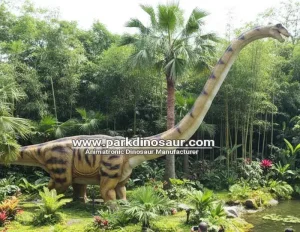
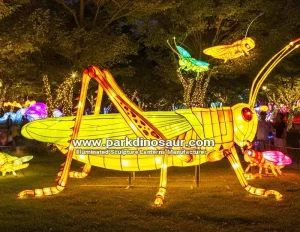
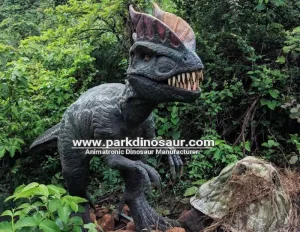
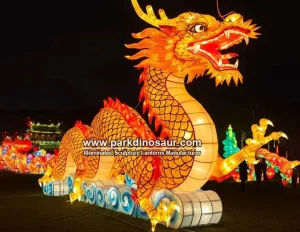
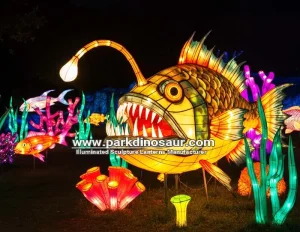
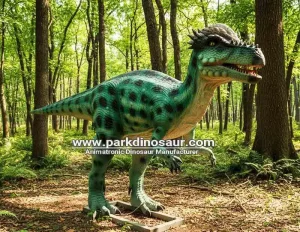
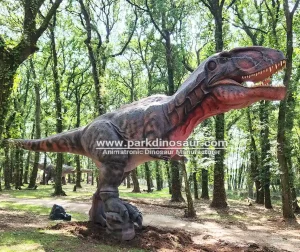
Comprehensive technical and commercial clarity directly from our chief engineering team regarding power stability, logistics, installation, and climate durability.
Every commercial lantern system built in our factory for Southern Africa utilizes specialized industrial-grade power transformation architectures. Rather than running raw 220V mains electricity directly into the sculptures, we incorporate isolated step-down transformers that supply constant 24V or 12V DC power to internal LED clusters. This design provides two crucial advantages: first, it guarantees 100% electrical safety for public interaction even during sudden summer rainstorms; second, it provides wide-input voltage tolerance (85V–265V AC) that absorbs severe line voltage surges when municipal power restores after load shedding. Furthermore, our master control panels are fully plug-and-play compatible with automatic transfer switches (ATS) connecting to on-site diesel backup generators or containerized solar BESS units.
Our structural engineers calculate wind load resistance using computational fluid dynamics for coastal deployments up to Beaufort Force 8 to 9 (gale force up to 85 km/h). The internal skeletons are fabricated from high-tensile Q235 structural steel with reinforced triangulation at all stress joints. For large planar lanterns (such as giant dragons or castle walls), we incorporate concealed air-relief pressure vents and use high-strength composite dupioni silk with superior tensile tear-resistance. On site, our installation blueprints provide specific non-invasive ballast anchor specifications (utilizing concrete deadweights or water-bladder anchors), eliminating the need to drill into manicured botanical lawns or paved resort plazas.
For a standard commercial festival project consisting of 30 to 60 medium-to-large lantern scenes (enough to illuminate a 2-to-3 kilometer walking trail), production in our Zigong factory requires 25 to 35 calendar days following 3D CAD design approval. Ocean transit from major Chinese shipping hubs (Ningbo, Shanghai, or Shenzhen) direct to Durban Harbour averages 20 to 24 days, and to Cape Town Port averages 24 to 28 days. Customs clearance and bonded transport to inland metropolitan centers like Johannesburg or Pretoria typically takes an additional 4 to 6 working days. We recommend initiating procurement 90 to 120 days prior to your target opening date.
Yes. We offer complete turnkey on-site installation and artistic commissioning services. For enterprise projects, our factory dispatches an experienced team consisting of a project manager, chief electrical engineer, master steel welders, and artistic silk/painting masters directly to your South African venue. This team works alongside your local maintenance or security staff to assemble sectional modules, execute seamless joint soldering, connect distribution boards, and perform nighttime illumination balancing. Alternatively, for venues with qualified internal engineering crews, we supply comprehensive color-coded wiring schematics, CAD foundation maps, and 24/7 video-guided remote engineering support.
Yes. All textile fabrics used in our lantern sheathing are treated with eco-friendly chemical flame retardants that comply with international NFPA 701 and DIN 4102-B1 standards, as well as South African National Standards (SANS 10177). Our low-heat LED emitters prevent thermal buildup against the internal fabric, reducing fire hazards to virtually zero. All paints are non-toxic, lead-free, and water-resistant acrylics that release no harmful VOCs into sensitive botanical gardens or zoological environments.
Absolutely. We design lanterns with modular, bolted flange joints and quick-disconnect IP67 multi-pin electrical couplings specifically for multi-year lifecycle reuse. When an event concludes, our disassembly instructions enable your crew to de-rig the installations into standardized steel storage cages. Kept in a dry, ventilated warehouse, the lanterns retain structural and aesthetic integrity for 3 to 5 seasonal cycles. Many of our international clients operate on a 2-year cycle in their primary park before leasing the entire package to partner resorts or municipal festivals in neighboring cities, generating additional commercial revenue.
Getting started is simple. Contact our engineering and sales department via our inquiry portal. Provide your venue location, approximate trail or park square meters, preferred theme (e.g., African Wildlife, Christmas Fantasy, Ocean Life, Dinosaur Paleotrail), and your target launch date. Within 48 hours, our technical engineering office will provide a comprehensive preliminary plan, including sample master layouts, exact electrical load projections, container shipping estimates, and factory-direct pricing tiers.